
NINGBO WELDMAN TECHNOLOGY CO.,LTD.
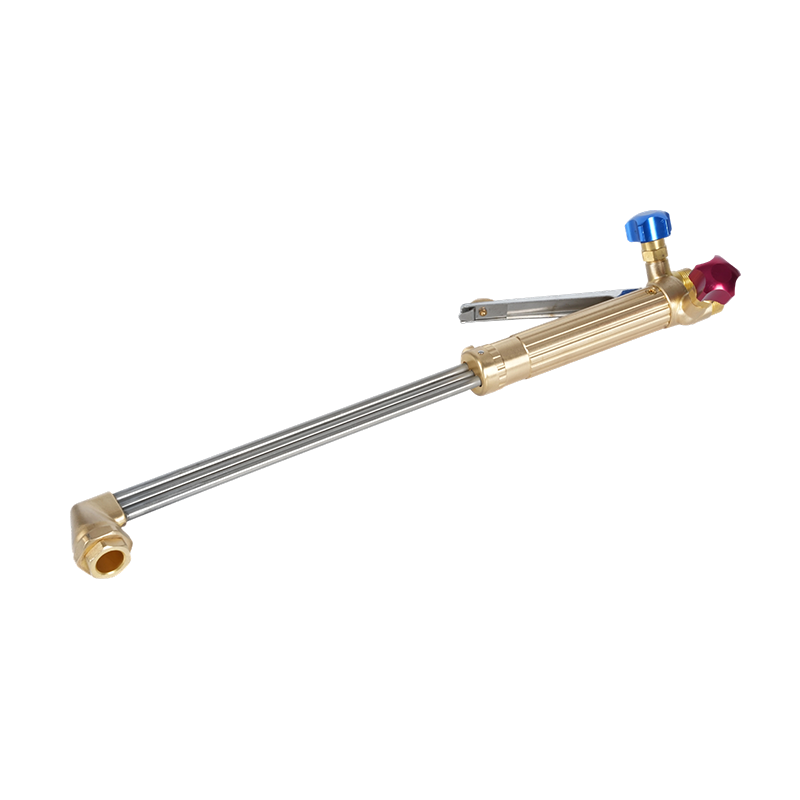
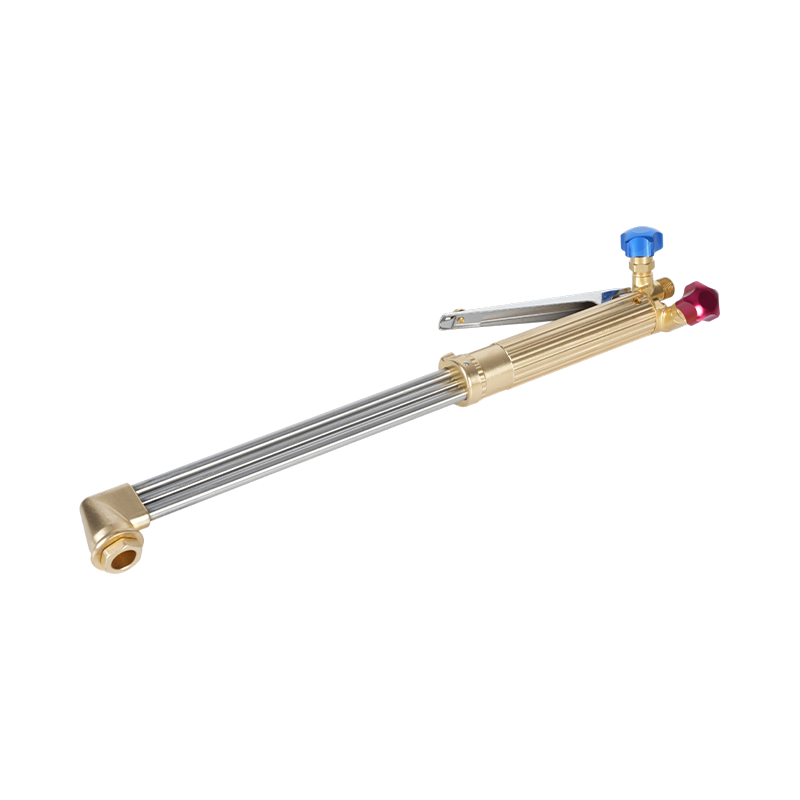
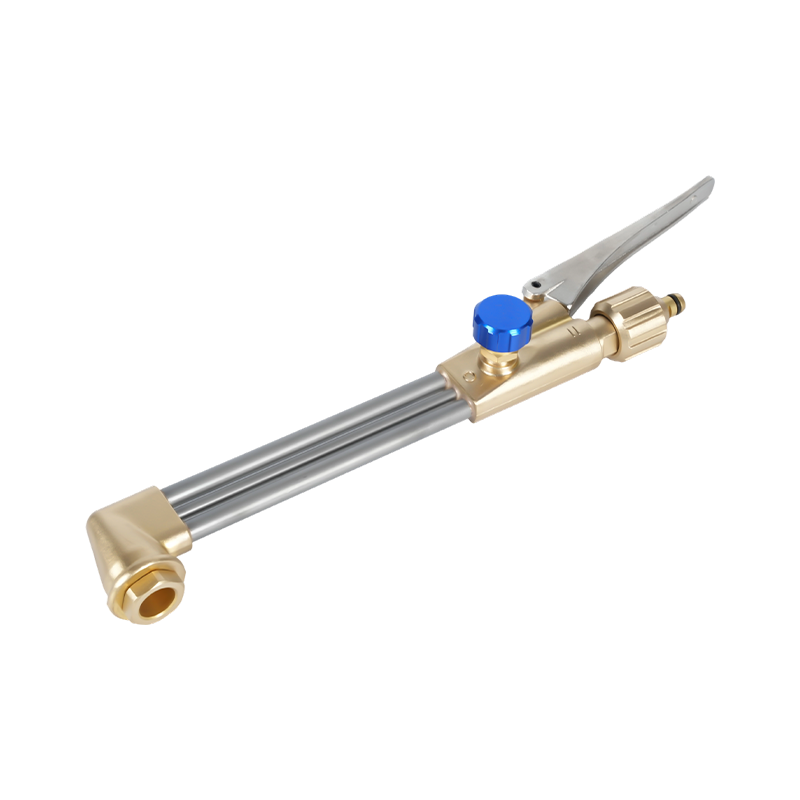
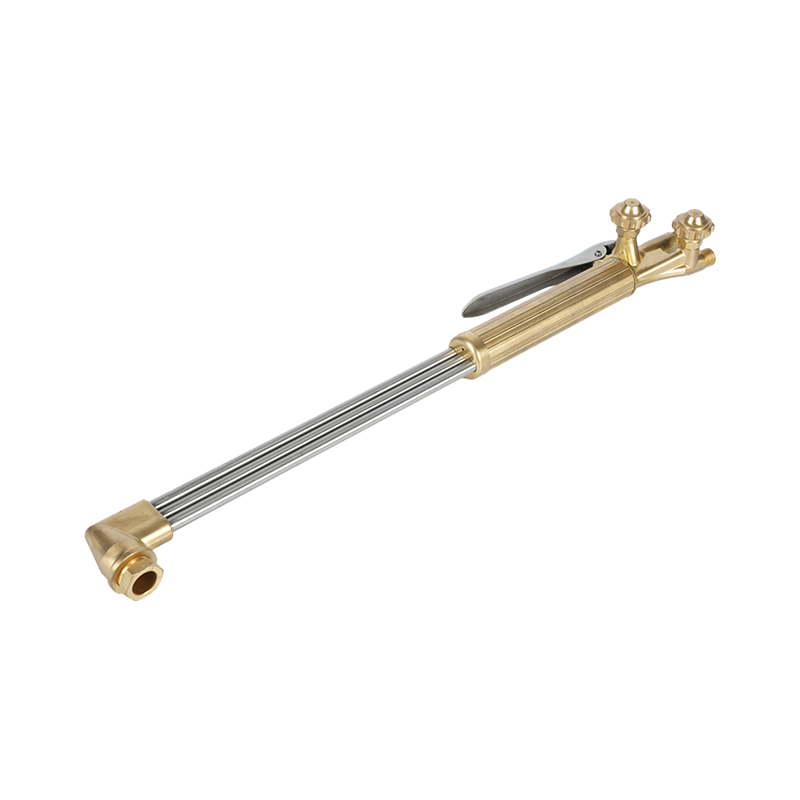
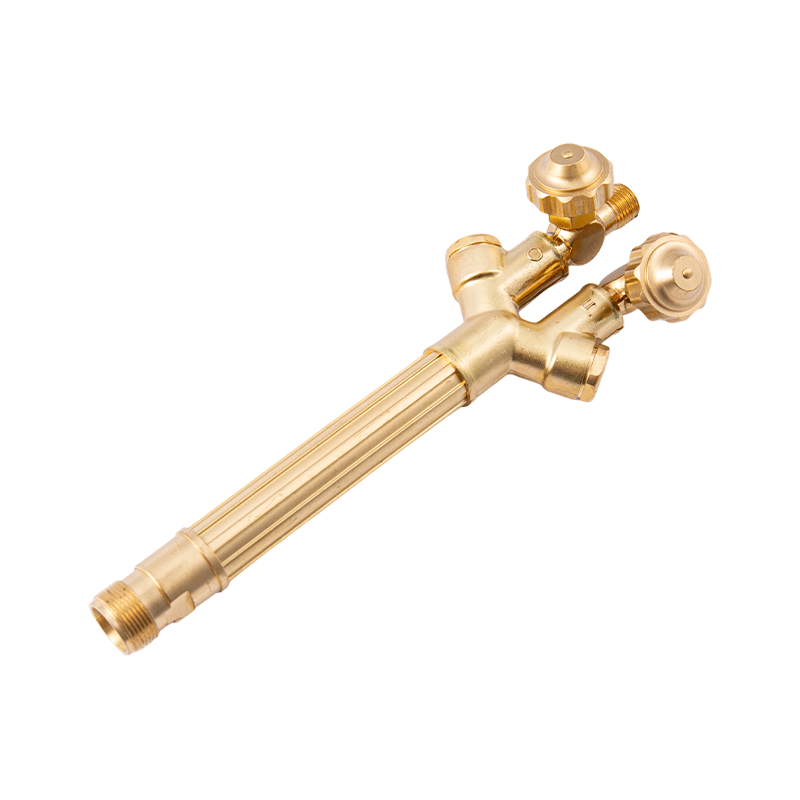
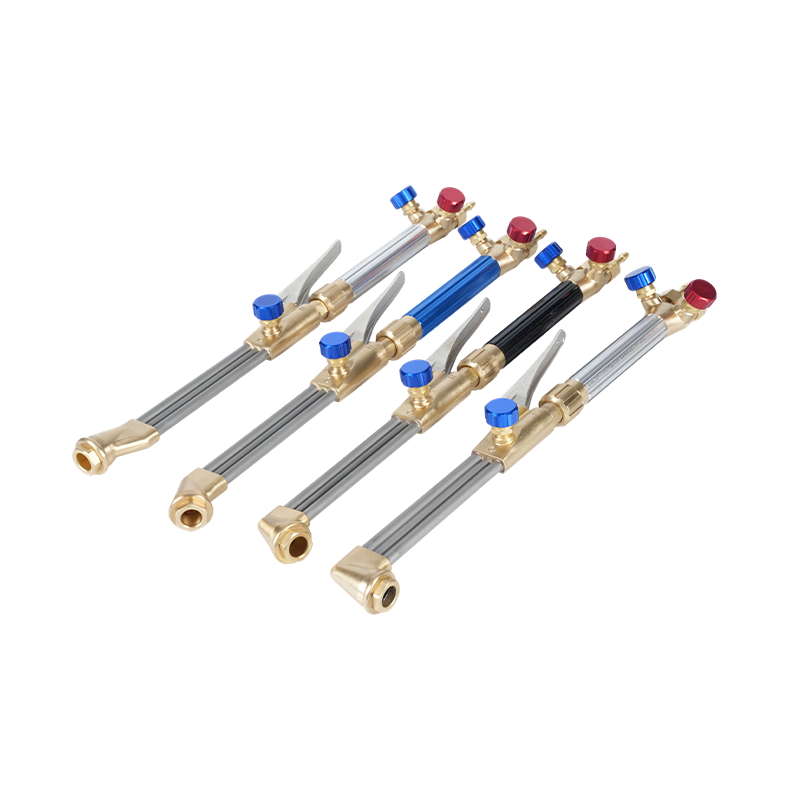
High-quality stainless steel handle with locking button.
Two stainless steel needle valves for precise flame adjustment.
Brass or aluminum handles available.
90° head (75° and 180° optional).
Acetylene nozzles: ANME, ANE.
Propane nozzles: PNME, PNM.
| Parameter | Details |
| Applicable Gas | Acetylene, Propane |
The E150 Lightweight Handheld Acetylene Cutting Torch – a professional tool designed for precision, comfort, and efficiency. Built with a premium stainless-steel handle, this torch is not only durable but also lightweight, making it easy to operate even during long working hours. The handle is thoughtfully equipped with a safety lock button, giving users extra control and peace of mind when working in demanding environments.For flame adjustment, the E150 features two stainless-steel needle valves, allowing operators to finely control the gas flow and achieve the exact flame intensity needed for different cutting requirements.Thanks to its ergonomic build and intuitive controls, the E150 torch is suitable for both experienced professionals and beginners who value ease of use. It can be applied in a wide range of industries, from metal fabrication and repair work to construction and maintenance. With its balance of safety, precision, and durability, the E150 Lightweight Handheld Acetylene Cutting Torch is a reliable partner for anyone seeking quality results with less effort.

A clean oxy-acetylene cut is mostly a matter of order and numbers. Inspect the outfit, set each regulator to the pressure chart for the tip in the torch, purge both hoses, light t...
READ MOREA fabricator preparing to cut 25 mm steel plate has a practical question: how hot is an acetylene torch? The useful answer is about 3,150 to 3,330°C (5,700 to 6,030°F) when acetyl...
READ MOREA properly adjusted oxy-acetylene torch produces a neutral flame of about 3,300°C (6,000°F) at the tip of the inner cone, and normal working values stay in the 3,100–3,300°C (5,60...
READ MORELight a properly adjusted oxy-acetylene torch and the tip of the inner cone sits somewhere between 5,600°F and 6,300°F (3,100–3,480°C). That makes acetylene, when burned with pure...
READ MOREYour workstation needs a gas cutting torch, but the moment you start comparing models, the specs stop making sense. Every supplier calls its product heavy duty, yet the handles we...
READ MORE
No. 1675, South Guangde Lake Road, Yinzhou District, Ningbo City, Zhejiang Province, China.
Copyright © 2024 NINGBO WELDMAN TECHNOLOGY CO.,LTD. All Rights
Reserved.
Wholesale E150 Lightweight Handheld Acetylene Cutting Torch Company


 English
 中文简体
中文简体