
 English
 中文简体
中文简体
Content
- 1 Oxy-Acetylene Cutting Torch Temperature: What You Need to Know
- 2 The Three Types of Oxy-Acetylene Flames and When to Use Each
- 3 Cutting Torch Gases: A Complete Comparison
- 4 What Metals Can and Cannot Be Cut with an Oxy-Fuel Torch
- 5 Welding Stainless Steel: Process Selection and Key Considerations
- 6 Critical Preparation Steps for Welding Stainless Steel
- 7 Safety When Using Cutting Torch Gases and Welding Stainless Steel
- 8 Choosing the Right Process: Cutting Gas and Welding Method Summary
Oxy-Acetylene Cutting Torch Temperature: What You Need to Know
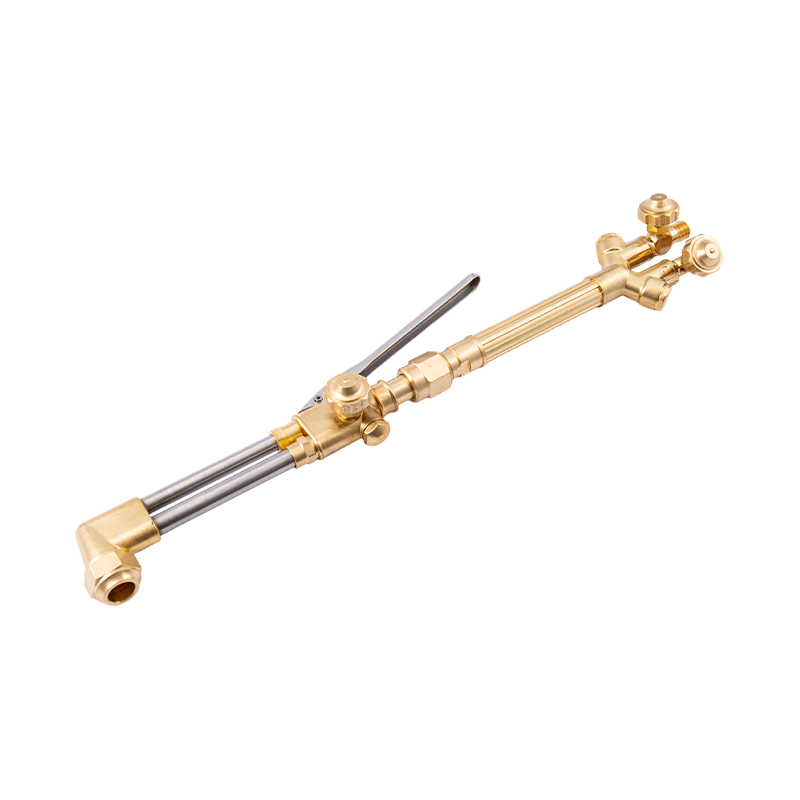
The oxy-acetylene cutting torch produces one of the highest flame temperatures achievable with standard industrial gas equipment. When oxygen and acetylene combust together, the resulting flame reaches approximately 3,480°C to 3,500°C (6,296°F to 6,330°F) — higher than any other commonly used fuel gas combination in welding and cutting practice. This extreme heat is what makes oxy-acetylene the benchmark fuel system against which all alternative cutting gases are measured.
However, understanding how a cutting torch actually uses that temperature is critical. A cutting torch does not simply melt metal — it operates through a two-stage process. First, the preheat flames surrounding the cutting tip raise the steel to its kindling temperature of approximately 1,800°F (982°C). Once the steel reaches this point, the central high-pressure oxygen jet is activated. This stream does not add heat directly; instead, it causes the preheated steel to oxidize rapidly — a process often described as "controlled, rapid rusting." The iron oxide produced has a lower melting point than the base steel, so it is blown clear of the cut as molten slag.
The preheat flames on a cutting torch typically reach between 4,400°F and 6,000°F depending on the gas used and the oxygen-to-fuel ratio. When the cutting lever is pressed, the preheat flames may actually become slightly cooler because the large oxygen volume drawn for the cutting jet momentarily enriches the preheat mixture. The cutting action itself is not a hotter flame — it is a chemical oxidation reaction driven by oxygen purity and pressure.
The Three Types of Oxy-Acetylene Flames and When to Use Each
The ratio of oxygen to acetylene determines which of three distinct flame types is produced. Each has specific applications, and using the wrong flame type causes measurable damage to the weld or cut quality.
Neutral Flame
A neutral flame burns all available fuel and oxygen completely, producing no excess of either. The inner cone is well-defined and bright, and the outer envelope is clear. This is the standard flame for most steel cutting and general welding applications. It neither adds carbon to the metal (which would embrittle it) nor creates excess oxidation (which would form iron oxide scale). For cutting operations, setting a neutral preheat flame before engaging the cutting oxygen stream produces the cleanest cuts with the most consistent kerf.
Carburizing (Reducing) Flame
A carburizing flame contains excess acetylene beyond what can be fully combusted with the available oxygen. It is identified by a feathery secondary zone extending beyond the inner cone — the length of this feather indicates the degree of excess acetylene. This flame type is used for surface hardening, annealing operations, and for gas welding of stainless steel, where it reduces the risk of chromium oxidation at the weld zone. The excess acetylene creates a reducing atmosphere around the molten pool. It should never be used for cutting, as it deposits carbon into the steel and produces black soot.
Oxidizing Flame
An oxidizing flame contains excess oxygen. The inner cone becomes shorter, more pointed, and takes on a slightly purplish tinge; the sound of the flame sharpens noticeably. While this flame type is hottest in theory, it is generally avoided for welding because the excess oxygen attacks the iron in the steel, forming undesirable iron oxide inclusions that weaken the joint. For cutting, an oxidizing flame adjustment in the cutting oxygen stream is inherent to the process — but the preheat flames should remain neutral to avoid premature oxidation of the surrounding material.
Cutting Torch Gases: A Complete Comparison
Oxy-fuel cutting systems are not limited to acetylene. A range of fuel gases can be used depending on the material being cut, required cutting speed, available infrastructure, and cost considerations. Each gas has distinct flame temperature characteristics and combustion profiles that affect performance differently.
| Gas | Max Flame Temp (with O2) | Best Use | Welding Capable? |
|---|---|---|---|
| Acetylene | 3,500°C / 6,330°F | Cutting, welding, precision work | Yes |
| Propane | ~2,800°C / ~5,072°F | Cutting, heating, bending | No |
| Propylene | ~2,900°C / ~5,252°F | Production cutting | Limited |
| Natural Gas | ~2,770°C / ~5,020°F | Cutting, low-cost operations | No |
| Hydrogen | ~3,000°C / ~5,432°F | Underwater cutting, aluminum | Specialized only |
Acetylene
Acetylene is the primary and most versatile fuel gas for oxy-fuel operations. It delivers the highest flame temperature of all common fuel gases and releases approximately 40% of its heat energy in the inner flame cone — this concentrated inner heat is what makes acetylene uniquely suited to welding. Its reducing zone cleans the steel surface as the weld progresses. The main disadvantage of acetylene is cost, and it carries a critical safety limitation: it becomes chemically unstable at pressures above approximately 15 psi (103 kPa), which restricts its operating pressure and means cylinders must be handled and stored upright. No more than one-seventh of the cylinder capacity should be withdrawn per hour to prevent acetone contamination of the hose and torch.
Propane
Propane burns at a lower peak temperature than acetylene and releases only a small proportion of its heat in the inner cone — most of the combustion energy is in the outer flame envelope. This heat distribution makes propane unsuitable for welding (it lacks the reducing zone needed to protect the molten weld pool) but highly effective for heating, bending, and cutting when used with an injector-style torch. Propane requires a different torch design than acetylene — an equal-pressure torch optimized for acetylene does not perform well with propane. Propane is significantly cheaper than acetylene, is heavier than air (requires low-area ventilation monitoring), and can cut steel plate at speeds comparable to acetylene for thicker sections.
Propylene
Propylene (LPG product) has a flame temperature similar to MAPP gas and performs comparably to propane for cutting. It concentrates heat at the outer edges of the heat cone rather than the inner, which suits production cutting operations. Propylene works best with injector-style torches and two-piece cutting tips. One practical advantage over propane: propylene tips rarely require cleaning during production runs. It is widely used in CNC oxy-fuel cutting systems as a cost-effective alternative to acetylene for high-volume steel plate cutting.
Natural Gas
Natural gas has the lowest flame temperature of the commonly used cutting gases. Its primary advantage is infrastructure: facilities with piped natural gas supply can eliminate cylinder management and reduce fuel costs substantially. It is used in large-scale industrial cutting operations where the slightly lower cutting performance is offset by cost savings and supply convenience. Natural gas is not used for welding.
Hydrogen
Hydrogen is specifically recommended for underwater cutting operations because acetylene becomes dangerously unstable under water pressure. It achieves a reasonably high flame temperature with oxygen but burns with an essentially invisible flame, creating a significant safety hazard in normal shop environments. Hydrogen is also used for certain specialized aluminum and non-ferrous metal cutting applications. It is not a general-purpose cutting gas and requires specialized handling protocols.

What Metals Can and Cannot Be Cut with an Oxy-Fuel Torch
Oxy-fuel cutting is fundamentally a chemical oxidation process. For it to work, the metal being cut must meet a specific condition: its oxides must have a lower melting point than the base metal itself. When this condition is met, the oxygen stream oxidizes the preheated metal and blows away the resulting molten slag cleanly. When it is not met, the oxide forms a protective crust that terminates the oxidation reaction and prevents the cut from progressing.
- Low to medium carbon steel: Cuts cleanly and efficiently. This is the primary application for oxy-fuel cutting, capable of handling material from 0.5mm to over 250mm thickness.
- Wrought iron: Can be cut effectively with oxy-fuel techniques.
- High-carbon steel: Difficult to cut because the slag melting point approaches that of the base metal, preventing clean ejection of oxides.
- Cast iron: Cannot be cut effectively — graphite between grains and grain structure interfere with the oxidation cutting action.
- Stainless steel: Cannot be cut with standard oxy-fuel methods. The chromium oxide layer that forms on the surface has a higher melting point than the steel beneath it, forming a protective barrier that stops the cutting oxygen from reaching fresh metal. Plasma cutting or laser cutting must be used for stainless steel.
- Aluminum and copper: Cannot be cut with oxy-fuel — these metals lack the iron content necessary for the oxidation cutting reaction to sustain itself.
Welding Stainless Steel: Process Selection and Key Considerations
Stainless steel is one of the most challenging metals to weld correctly. Its high chromium content (minimum 10.5%) is what gives it corrosion resistance — but that same chromium is extremely reactive to oxygen at welding temperatures. When chromium oxidizes during welding, it is depleted from the surrounding metal, creating zones with significantly reduced corrosion resistance. This phenomenon, known as sensitization, is the central technical challenge of stainless steel welding regardless of the process used.
Additionally, stainless steel has lower thermal conductivity than mild steel, which means heat builds up more rapidly in the weld zone and spreads more slowly. This makes distortion a persistent problem, particularly with thin-gauge material. Stainless steel also expands approximately 50% more than mild steel when heated, which amplifies distortion if heat input is not carefully managed.
TIG Welding (GTAW) — The Preferred Method
TIG welding is the gold standard for stainless steel welding, particularly for thin-gauge material, tube, and any application where weld appearance and corrosion resistance are critical. A non-consumable tungsten electrode generates the arc, while pure argon shielding gas protects the weld pool from atmospheric oxygen and nitrogen. The welder feeds filler rod manually, allowing precise control of heat input and puddle size.
For 300-series austenitic stainless steels (the most common), the standard filler rod is 308L. For 316 and 316L grades (which contain molybdenum for enhanced corrosion resistance), use 316L filler. For type 321 alloy, 347 filler wire is appropriate. Using the wrong filler grade compromises the corrosion performance of the finished weld even if the mechanical joint is sound.
Key TIG parameters for stainless steel: set amperage at approximately 1 amp per 0.001 inch (0.025mm) of material thickness. Use a 2% thoriated or 2% lanthanated tungsten electrode ground to a needlepoint. Argon shielding gas flow rate should be set between 15 and 20 cubic feet per hour (CFH). Keep travel speed consistent — working slowly with a proper heat input is preferable to rushing and overheating the surrounding metal.
Back Purging for Tube and Pipe Welding
When TIG welding stainless steel tube or pipe, the inside surface of the weld root is exposed to atmospheric oxygen during the welding process. This causes a phenomenon called "sugaring" — a rough, granular oxidized surface on the weld root that significantly reduces corrosion resistance and mechanical strength. Back purging with argon gas (flowing through the tube interior while welding to displace oxygen) is essential for any stainless steel tube application where root quality matters. Plug both ends loosely and flow argon at low pressure through one end to maintain a positive purge throughout the weld.
MIG Welding (GMAW) Stainless Steel
MIG welding is a practical option for stainless steel where production speed matters more than weld aesthetics, or where TIG equipment is not available. The process uses a continuously fed stainless steel wire electrode with a shielding gas to protect the weld pool. The correct shielding gas for MIG welding stainless steel is pure argon or an argon-helium blend — not the argon-CO2 mixtures used for mild steel MIG welding, as CO2 promotes carbon pickup and oxidation in stainless. Set the shielding gas flow rate between 14 and 16 liters per minute (approximately 30 CFH). Use stainless wire matched to the base metal grade and consider staggering weld sequences to minimize heat distortion.
Oxy-Acetylene Welding of Stainless Steel
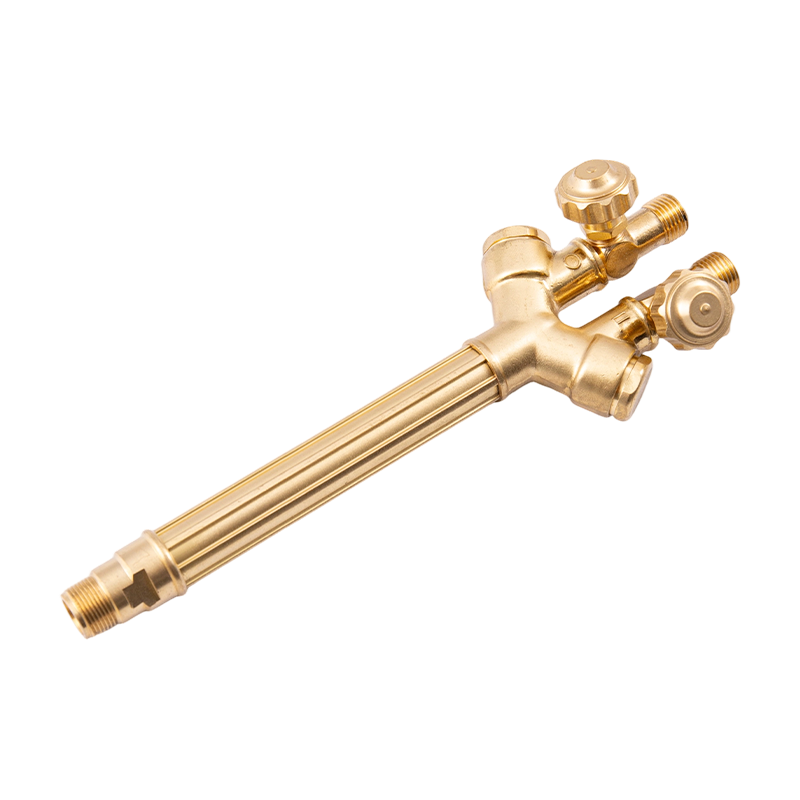
Gas welding of stainless steel with oxy-acetylene is technically possible but significantly more difficult than TIG welding and generally not recommended for production or structural applications. The process requires a specialized stainless steel welding flux — typically a dry powder mixed to a paste with isopropyl alcohol and applied to both the front and back of the joint, as well as to the filler rod. This flux prevents chromium oxidation during the weld.
The flame setting is critical: a neutral flame with a slight excess of acetylene (a marginally reducing flame) is preferred. An oxidizing flame burns chromium out of the steel, destroying its corrosion resistance. An excessive carburizing flame adds unwanted carbon to the weld. The flux residue after welding is hard and glass-like where it was fully heated — it must be mechanically removed (wire brushing, bead blasting) before the joint is put into service. Flux that did not reach full temperature can be wiped away more easily.
In grades like 304, excessive heat (between 500°C and 800°C) can cause chromium carbide formation at grain boundaries — a condition known as carbide precipitation that leads to intergranular corrosion over time. Low-carbon grades (304L, 316L) are more resistant to this problem when welding with higher heat input methods.
Critical Preparation Steps for Welding Stainless Steel
Regardless of the welding process selected, surface preparation and contamination control are non-negotiable when working with stainless steel.
- Eliminate ferrous contamination: Any iron or steel particles on the stainless surface — from wire brushes used on carbon steel, grinding discs, or metal dust — will embed in the stainless and cause rust spots. Use dedicated stainless steel brushes, grinding discs, and cutting wheels that have never touched carbon steel.
- Clean all surfaces thoroughly: Remove oil, grease, and mill scale from the joint area using acetone or a dedicated stainless steel degreaser before welding. Even fingerprints can cause localized contamination.
- Ensure zero joint gaps: Stainless steel is particularly prone to blow-through when gaps exist between joint faces. Hold the joint up to a light source — if light passes through, the fit-up is too loose.
- Clamp and tack weld securely: Due to stainless steel's high thermal expansion, unclamped workpieces can distort significantly during welding. Stagger tack welds and consider staggering the sequence of main welds to distribute heat evenly.
- Control interpass temperature: Allow the weld zone to cool between passes. Sustained high interpass temperatures increase the risk of sensitization (chromium carbide precipitation) and distortion.
Safety When Using Cutting Torch Gases and Welding Stainless Steel
Oxy-fuel cutting and stainless steel welding both present specific safety hazards that require direct attention.
Gas Cylinder and Torch Safety
- Acetylene cylinders must always be stored and used upright. If a cylinder has been tipped on its side, allow it to stand upright for at least one hour before use to allow the acetone to settle.
- Never withdraw acetylene at a rate exceeding one-seventh of the cylinder capacity per hour — doing so draws acetone into the hoses and torch, causing damage and potential hazard.
- Never operate acetylene above 15 psi working pressure — at higher pressures it becomes shock-sensitive and can decompose explosively.
- Propane is heavier than air and will accumulate in low areas (pits, floor-level depressions) if it leaks. Ensure adequate low-level ventilation when using propane or LPG fuel gases.
- Always use hoses, regulators, and tips rated for the specific fuel gas being used. Propane chemically degrades hose materials designed for acetylene over time.
Stainless Steel Welding Fume Hazards
Welding stainless steel generates chromium (VI) fume — a known human carcinogen — along with nickel compounds and other hazardous metal fumes. These fumes are more hazardous than those produced by mild steel welding and require active control measures. Local exhaust ventilation (LEV) positioned close to the arc or flame is mandatory in any professional setting. Personal protective equipment including an air-fed welding respirator or at minimum a properly rated fume-filtering respirator should be worn. Do not rely on general shop ventilation alone. Exposure limits for hexavalent chromium are strictly regulated and require monitoring in production environments where stainless welding is performed regularly.
Choosing the Right Process: Cutting Gas and Welding Method Summary
For cutting steel, the choice of fuel gas depends primarily on available budget, required cutting speed, and torch design. Acetylene delivers the fastest pierce times and the most intense inner heat, making it ideal for precision work, thin material, and situations where setup time matters. Propane and propylene offer lower operating costs and comparable cutting speeds on thicker material with the correct injector torch setup. Natural gas is the economical choice for high-volume industrial cutting facilities with piped supply. No oxy-fuel gas is effective for cutting stainless steel, aluminum, or non-ferrous metals — plasma or laser cutting must be used for these materials.
For welding stainless steel, TIG is the preferred process wherever appearance, corrosion resistance, and mechanical strength are priorities. MIG welding is appropriate for heavier sections and production work where speed matters. Oxy-acetylene gas welding of stainless is possible but demanding, requiring correct flux application, precise flame setting, and post-weld flux removal — it is better suited to field repair situations where electric welding equipment is unavailable. Whatever process is used, contamination control, correct filler selection, and heat management are the three factors that determine whether a stainless steel weld performs as intended over the long term.