
 English
 中文简体
中文简体
Content
- 1 What Is Oxy-Fuel Cutting and Why Safety Comes First
- 2 Understanding Oxygen: The Oxidizing Agent, Not the Fuel
- 3 Gas for Cutting Torch: The Four Primary Fuel Options
- 4 Fuel Gas Comparison at a Glance
- 5 Cylinder and Regulator Safety: The Foundation of Oxy-Fuel Safety
- 6 Hose, Torch, and Tip Safety Procedures
- 7 Backfire, Flashback, and Emergency Response
- 8 Personal Protective Equipment and Workspace Requirements
What Is Oxy-Fuel Cutting and Why Safety Comes First
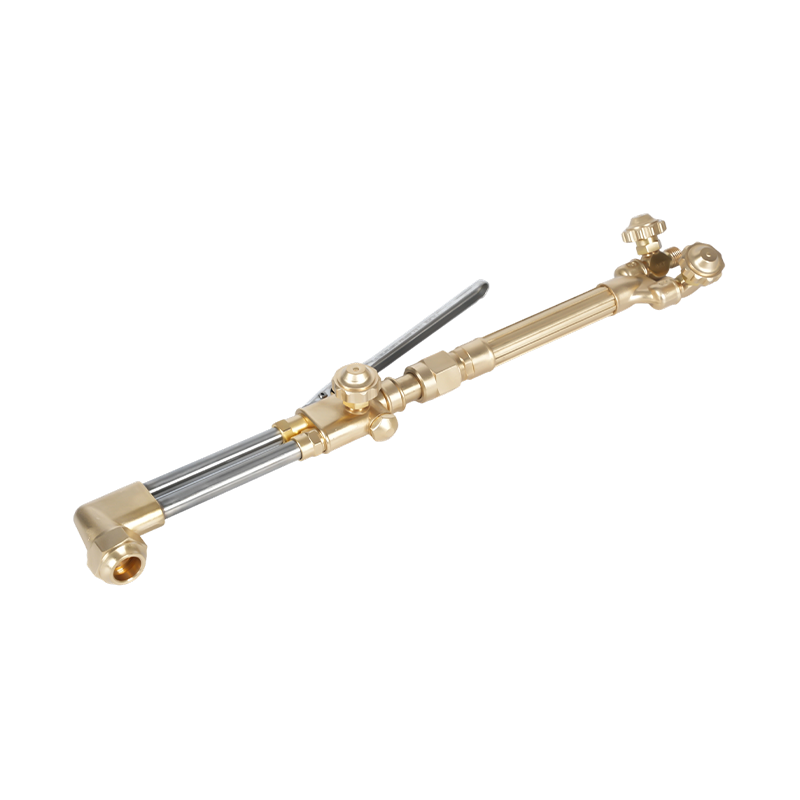
Oxy-fuel cutting is a thermal process that combines a fuel gas with pure oxygen to produce a high-temperature flame capable of cutting through ferrous metals several inches thick. Unlike mechanical cutting methods, oxy-fuel requires no electricity, works in the field or on a shop floor, and remains one of the most cost-effective ways to cut heavy steel plate, structural sections, and pipe — which is why it has been a cornerstone of fabrication, construction, demolition, and salvage operations for over a century.
The same characteristics that make oxy-fuel cutting so powerful also make it genuinely hazardous when handled incorrectly. The process puts pressurized flammable gases, pure oxygen, an open flame, molten metal slag, and infrared radiation all in close proximity to the operator. Understanding the combustion triangle — fuel, oxygen, and ignition — and controlling all three is the foundation of safe oxy-fuel practice. Combustion requires all three elements simultaneously; removing any one of them stops the reaction. Every safety rule in oxy-fuel cutting exists to manage one or more sides of that triangle.
This guide covers the primary fuel gases used in cutting torches, their flame characteristics and hazard profiles, and the essential safety procedures that apply regardless of which fuel is in use.
Understanding Oxygen: The Oxidizing Agent, Not the Fuel
A critical and frequently misunderstood point: oxygen is not the fuel in oxy-fuel cutting — it is the oxidizing agent. Oxygen chemically combines with the fuel gas to release heat during combustion, and a separate high-pressure oxygen jet from the cutting torch's central orifice is what actually causes the metal to burn and be expelled from the kerf.
Pure oxygen used in cutting applications is supplied at 99.5% purity or higher, far above the 21% present in atmospheric air. At these concentrations, materials that are normally non-flammable — including grease, oil, rubber, and certain metals — can ignite explosively. This is the single most important safety principle governing oxygen cylinder and regulator handling: oil and grease must never contact any oxygen equipment, valve, or fitting. Even a trace amount of petroleum lubricant on an oxygen regulator valve can cause a violent fire or explosion when the cylinder is opened.
Oxygen cylinders must be stored upright, secured against tipping, and kept a minimum of 20 feet (6 meters) away from fuel gas cylinders or separated by a fire-resistant barrier of at least 5 feet in height. Open oxygen cylinder valves fully when in use; a partially open oxygen valve creates a pressure differential at the seat that accelerates wear and increases the risk of a leak.
Gas for Cutting Torch: The Four Primary Fuel Options
Four gases make up the vast majority of fuel choices for oxy-fuel cutting torches: acetylene, propane, propylene, and MAPP gas. Each has a distinct chemical composition, flame temperature, BTU output distribution, oxygen-to-fuel ratio requirement, and associated safety profile. Selecting the right fuel gas for the application — and using equipment rated for that specific gas — is a prerequisite for both performance and safety.
Acetylene (C₂H₂): Hottest Flame, Highest Risk
Acetylene is the most widely used fuel gas for oxy-fuel cutting and the only fuel gas suitable for oxy-fuel welding. It produces the hottest flame of any common cutting fuel at approximately 5,720°F (3,160°C), with the majority of its heat — around 507 BTU — concentrated in the inner flame cone. This inner cone concentration is what gives acetylene its fast piercing speed and minimal heat-affected zone on cut edges, making it the preferred choice for precision cutting, thin-to-medium plate work, and any application where weld quality immediately adjacent to the cut matters.
However, acetylene carries more safety constraints than any other fuel gas. It is chemically unstable at pressures above 15 PSI (1 bar); at higher pressures, acetylene can decompose explosively without any oxygen present. For this reason, acetylene cylinders are not hollow — they are packed with a porous mass saturated with liquid acetone, which dissolves the acetylene and keeps it stable. If a cylinder is laid on its side or withdrawn too quickly, liquid acetone enters the hose and torch, causing the flame to drip burning solvent from the tip.
The safe withdrawal rate from an acetylene cylinder must never exceed one-seventh of the cylinder's total volume per hour. Exceeding this rate draws acetone out of the porous mass along with the gas. Acetylene is also highly prone to flashback — a condition where the flame travels backward through the torch and hose toward the cylinder. Flashback arrestors must always be installed on both the fuel and oxygen lines when working with acetylene. Acetylene is lighter than air; in the event of a leak, it rises and can accumulate in roof spaces. Its distinctive garlic-like odor is detectable at concentrations below 2%, well before it reaches its lower explosive limit of 2.5%.
Propane (C₃H₈): Economical, High-BTU, Slower Pierce
Propane is the most popular alternative fuel for oxy-fuel cutting, valued primarily for its significantly lower cost, wide availability, and simpler storage compared to acetylene. It produces a flame temperature of approximately 5,122°F (2,828°C) — about 600°F cooler than acetylene — but with a substantially higher total calorific value of around 2,600 BTU per cubic foot. Critically, propane delivers most of its heat in the outer flame cone rather than the inner cone. This reverses the combustion geometry from acetylene: propane excels at preheating large mass and is highly efficient for heating and bending applications, but requires longer initial preheat times for cutting and results in slower piercing speeds through the start of a cut.
Propane requires a fuel-to-oxygen ratio of approximately 1:4 (one part propane to four parts oxygen), compared to 1:1 for acetylene. This higher oxygen demand means propane cutting setups consume oxygen faster, which operators must factor into cylinder planning for high-volume cutting jobs. Because propane is heavier than air, it sinks to floor level in the event of a leak — creating a risk of gas accumulation in low-lying areas, floor drains, and basements. Storage areas must be ventilated at floor level and kept clear of ignition sources. Propane equipment — regulators, hoses, and torch tips — must be rated specifically for propane; acetylene hoses and tips are not interchangeable.
Propylene (C₃H₆): The Middle Ground
Propylene occupies a performance position between acetylene and propane. Its flame temperature ranges from approximately 4,800°F to 5,300°F, and it delivers a total calorific value of around 2,400 BTU per cubic foot. Like propane, propylene delivers most of its heat in the outer cone — but with a higher BTU value in the inner cone than propane, giving it a shorter piercing time and a cut profile that more closely resembles acetylene than propane does. Propylene requires 3.5 parts of oxygen per part of fuel for complete combustion, slightly more efficient than propane's 4:1 ratio.
Propylene cutting tips are designed with a 1/16" recess in the tip face to account for its slower burn rate compared to acetylene (13.5 feet per second versus 29 feet per second for acetylene). Using an acetylene tip with propylene will result in an unstable, inefficient flame. Propylene is generally considered a cleaner-burning gas than acetylene and produces less slag, reducing post-cut cleanup time on structural cutting jobs.
MAPP Gas (Methylacetylene-Propadiene): Specialty Applications
MAPP gas — technically MPS (methylacetylene-propadiene stabilized) following the discontinuation of the original Dow Chemical formulation — produces a flame temperature similar to propylene and a total calorific value of approximately 2,400 BTU per cubic foot, with most heat concentrated in the secondary cone. It requires 2.5 parts oxygen per part fuel. MAPP's primary advantage over other alternate fuels is its performance in high-pressure submerged cutting applications, such as underwater demolition, where its stability under pressure gives it a meaningful edge. For standard surface cutting, MAPP offers no significant performance benefit over propylene or propane and is typically more expensive. Its use today is largely limited to small-part heating, brazing, and specialty underwater work.

Fuel Gas Comparison at a Glance
| Gas | Flame Temp (°F) | Total BTU/CF | Peak Heat Zone | O₂:Fuel Ratio | Best Use |
|---|---|---|---|---|---|
| Acetylene | ~5,720 | 1,470 | Inner cone | 1:1 | Precision cutting, welding, repair |
| Propane | ~5,122 | 2,600 | Outer cone | 4:1 | Heating, bending, scrap cutting |
| Propylene | 4,800–5,300 | 2,400 | Outer cone | 3.5:1 | General cutting, cleaner finish |
| MAPP / MPS | ~5,300 | 2,400 | Outer cone | 2.5:1 | Underwater cutting, brazing |
Cylinder and Regulator Safety: The Foundation of Oxy-Fuel Safety
Most oxy-fuel incidents originate not at the torch tip but at the cylinder and regulator level, where improper handling of pressurized gas creates the conditions for leaks, fires, and catastrophic failures. The following practices are non-negotiable regardless of which fuel gas is in use.
Always read cylinder labels. Cylinders are not universally color-coded — suppliers can paint cylinders any color. Never assume a cylinder's contents based on color alone. Every cylinder carries a United Nations identification number: UN 1072 for oxygen, UN 1001 for acetylene, UN 1978 for propane, and UN 1077 for propylene. If a cylinder has no readable label, do not use it.
Store cylinders separately. Fuel gas and oxygen cylinders must be stored at least 20 feet apart or separated by a fire-resistant wall. Both must be stored upright and secured to a fixed structure to prevent tipping. Acetylene cylinders must always remain upright — if a cylinder has been on its side, stand it upright and allow it to rest for at least one hour before use to allow the acetone to re-saturate the porous mass before withdrawing gas.
Inspect regulators before every use. Check regulator valves, seats, and threads for oil, grease, debris, and physical damage. Any contaminated component must be professionally serviced before use. When opening the oxygen cylinder valve, stand to the side — not in front of the regulator — and open the valve fully. For acetylene, open the cylinder valve no more than three-quarters of a turn, which allows the valve to be closed quickly in an emergency. Alternate fuel valves may be opened fully.
Perform a pressure leak test before every session. With regulators attached, set oxygen to 10 PSI and close the cylinder valve. Monitor both gauges for two to three minutes; any pressure drop indicates a leak that must be located and repaired before lighting the torch. Use a soapy water solution — never an open flame — to locate leaks at fittings and connections. Repeat the test for the fuel gas side.
Hose, Torch, and Tip Safety Procedures
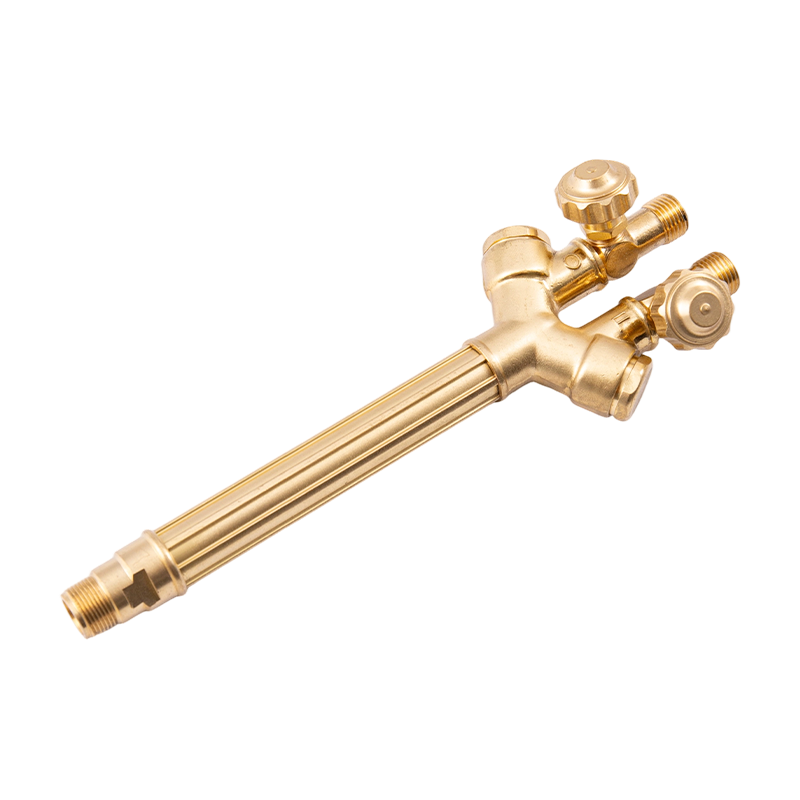
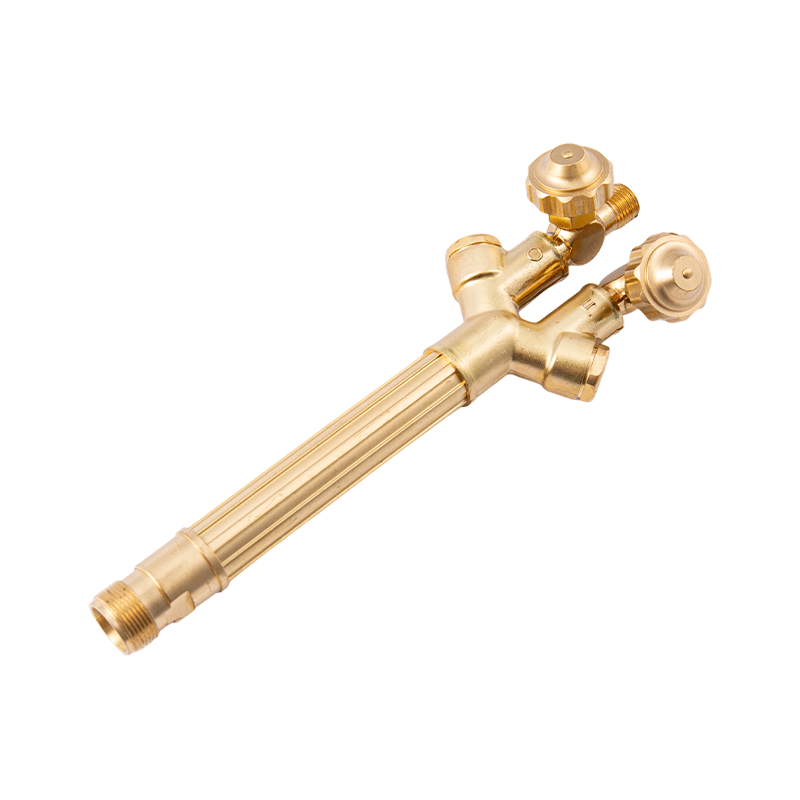
Oxy-fuel hoses are color-coded and thread-coded by design to prevent dangerous cross-connections. Acetylene (and other fuel gas) hoses are red and use left-hand threads, identifiable by a groove machined across the fitting nut. Oxygen hoses are green and use right-hand threads with no groove. This engineering safeguard means correct connections cannot be made in reverse — but only if the operator uses the correct, unmodified hoses for each gas. Never substitute acetylene hoses for propane or other alternate fuels; propane chemically degrades the inner liner of acetylene-rated hoses, causing it to flake off and potentially block the torch tip or regulator.
Before lighting any torch, purge both hoses independently. Set the regulator to approximately 5 PSI, open the torch valve briefly to allow gas to flow through and displace any air or contaminants, then close the valve. Purging eliminates the risk of a mixed-gas pocket in the hose that could cause a backfire on ignition.
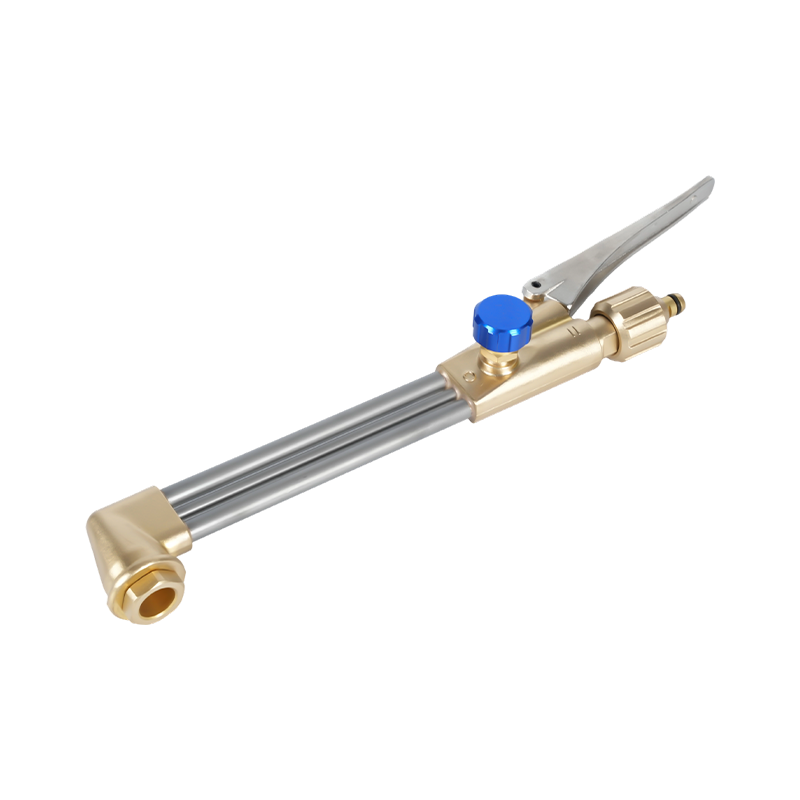
Inspect torch tips before every use. Acetylene tips have a flat or slightly concave tip face. Alternate fuel tips are progressively recessed — propylene 1/16", MAPP 1/32", propane and natural gas 3/32". Using the wrong tip for a fuel gas changes the flame geometry, efficiency, and stability. Clean dirty or clogged tips with dedicated tip cleaners; never use wire or drill bits that could enlarge the orifice.
Always use a friction spark lighter to ignite the torch — never a match, butane lighter, or open flame. Open the fuel valve first (approximately one-quarter turn), ignite immediately, then slowly introduce oxygen to adjust to a neutral flame. A neutral flame — where the inner cone is well-defined with no feathering and no excess oxygen haze — is the standard cutting flame. A carburizing (excess fuel) flame indicates insufficient oxygen; an oxidizing flame (excess oxygen) produces a smaller, pointed inner cone and should be avoided on most metals as it introduces oxides into the cut.
Backfire, Flashback, and Emergency Response
Two distinct torch malfunctions require immediate recognition and response. A backfire is a momentary recession of the flame back into the torch tip, usually accompanied by a loud pop. It is most often caused by touching the tip to the workpiece, operating at incorrect pressures, or a dirty tip. In most cases the flame self-extinguishes and can be relit after the tip has cooled and been inspected. A backfire is a warning sign, not a minor nuisance — it indicates a condition that, if uncorrected, can escalate.
A flashback is far more serious: the flame burns back through the torch body and into the hose, toward the cylinder. Flashback is identifiable by a high-pitched squealing or hissing sound from the torch, persistent flame at the torch body with no visible flame at the tip, or unusually hot torch handles. In the event of a flashback: close the oxygen torch valve immediately, then close the fuel valve. Do not simply turn off the fuel first — removing the fuel while oxygen continues to flow can draw the flame further back. After shutting both torch valves, close both cylinder valves. Allow all equipment to cool completely before inspecting for damage. Do not reuse any equipment that has experienced a flashback until it has been professionally inspected and certified.
Flashback arrestors — installed at the torch body or regulator outlets on both the fuel and oxygen lines — contain check valves and thermal cutoffs designed to stop a flashback before it reaches the hoses and cylinders. They are mandatory in many jurisdictions for acetylene systems and are strongly recommended for all oxy-fuel setups regardless of fuel type.
Personal Protective Equipment and Workspace Requirements
Oxy-fuel cutting produces sparks, molten slag, ultraviolet and infrared radiation, metal fumes, and combustion byproducts. Personal protective equipment must address all of these hazards simultaneously.
Eye and face protection is non-negotiable. A full-face welding shield with filter lenses rated to the appropriate shade for cutting — typically shade 3 to 6 for oxy-fuel work depending on intensity — worn over safety glasses provides both the required optical protection and splash protection from slag. The process produces infrared radiation in quantities sufficient to cause corneal damage from repeated unprotected exposure.
For body protection, tightly woven natural fibers are preferred over synthetics. Wool is naturally flame-retardant; denim provides reasonable protection. Synthetic fabrics — polyester, nylon, acrylic — melt rather than char and dramatically worsen burn injuries. A leather or flame-resistant welding jacket, leather gloves, and leather boots with no exposed laces provide the layered protection appropriate for cutting work. Avoid upturned shirt cuffs, open shirt collars, and cuffed trouser legs — these act as collection points for falling sparks and slag.
The workspace must be well-ventilated at all times. Oxy-fuel cutting of coated, galvanized, or painted steel generates metal fume that includes zinc oxides, lead compounds, and other toxic byproducts depending on the base material and coating. Local exhaust ventilation or, at minimum, a respirator rated for metal fume is required when cutting coated materials. The work area must be cleared of flammable materials to a radius of at least 35 feet (10 meters) in all directions before any cutting begins, and a fire watch should remain in place for at least 30 minutes after cutting stops, as slag can ignite combustibles that are not immediately visible from the cutting position.