
 English
 中文简体
中文简体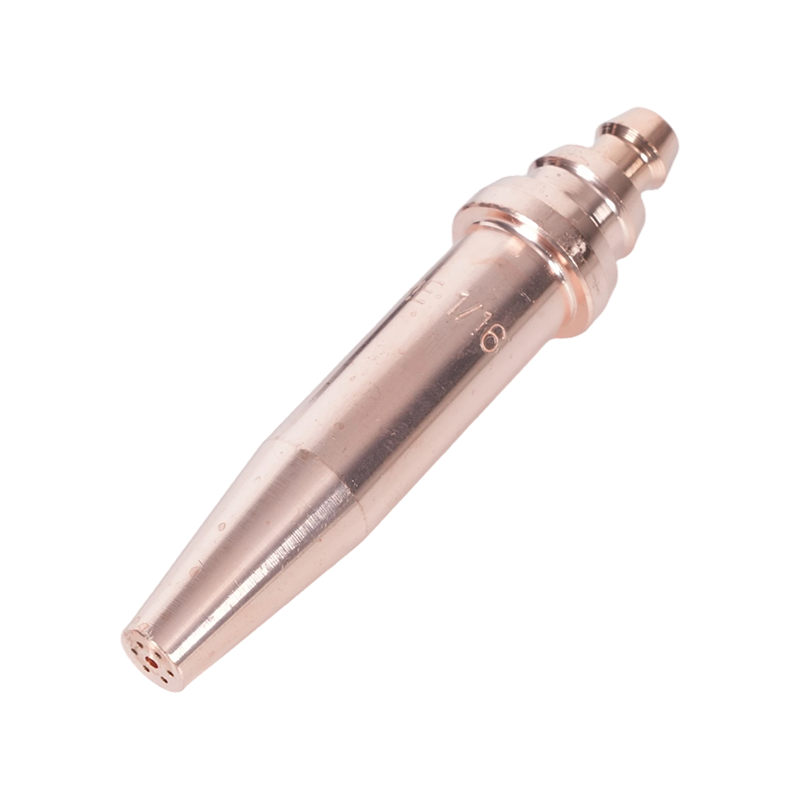
What Sets Oxy-Acetylene Tips Apart from Other Fuel Tips
Not all cutting torch tips are interchangeable, and the distinction begins with the fuel gas. Oxygen-acetylene tips are engineered around acetylene's unique combustion characteristics: it burns hotter than any other commercially available fuel gas, reaching flame temperatures of approximately 3,500°C (6,332°F) at the inner cone. That heat output allows acetylene to preheat metal to the ignition point for oxygen cutting faster than propane, natural gas, or propylene—which is why oxy-acetylene remains the dominant choice for structural steel cutting and precision metal fabrication despite competition from alternative fuel systems.
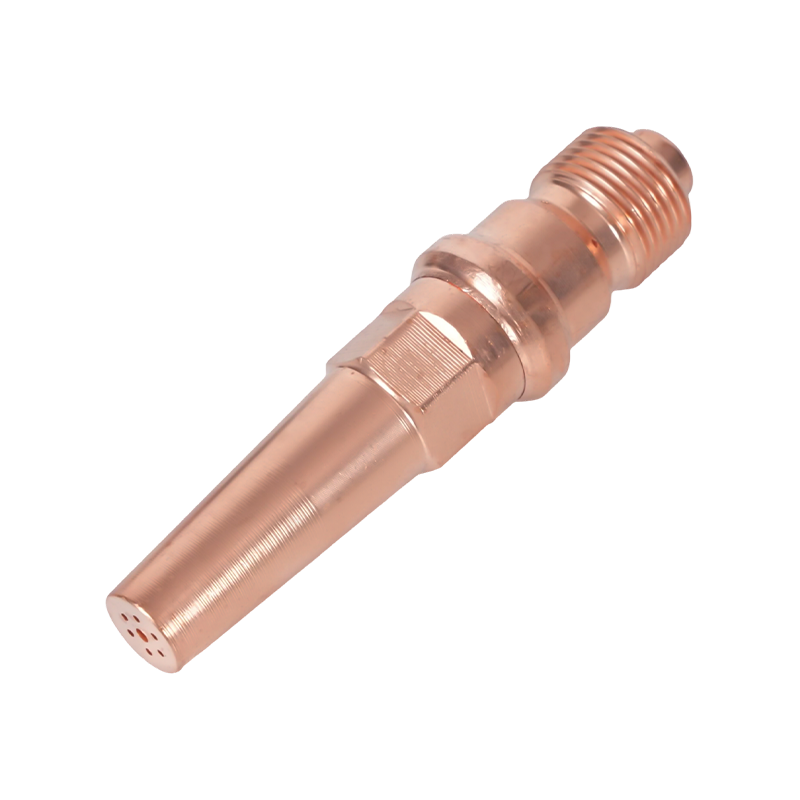
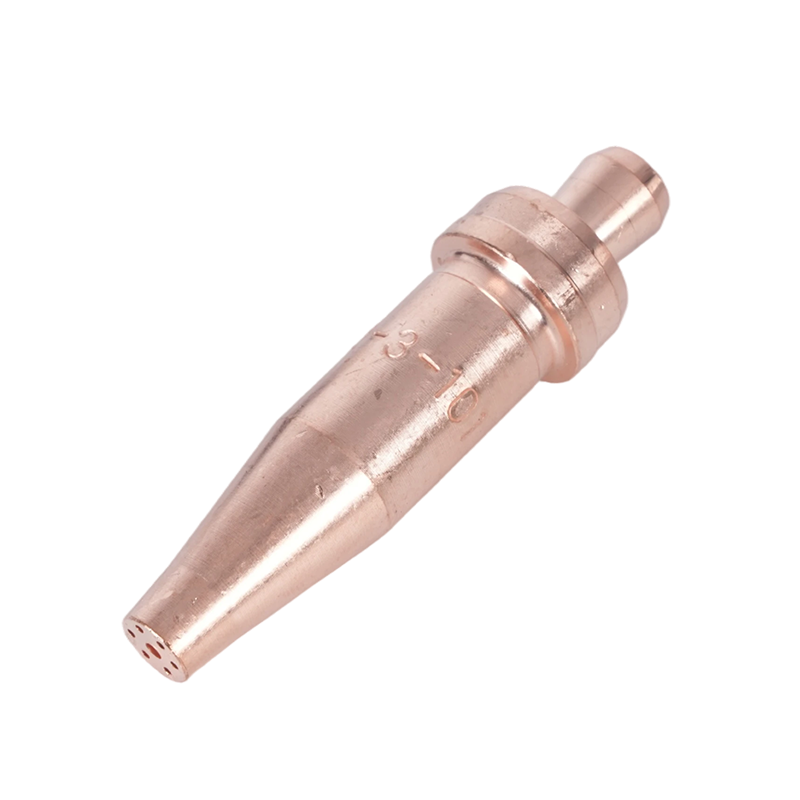
The tip's design reflects this: acetylene tips typically use a single-orifice cutting jet surrounded by multiple preheat ports, all integrated into one copper body. The preheat ports and cutting oxygen channel are calibrated specifically for acetylene's burn rate and pressure curve. Using an acetylene tip with a slower-burning fuel like propane produces an unbalanced flame, carbon buildup, and unpredictable cutting performance. Conversely, a propane tip on an acetylene setup cannot deliver the preheat intensity the fuel is capable of. Matching tip to fuel is not optional. For a vetted full range of acetylene cutting torch tips covering standard, heavy-duty, and specialized profiles, the selection should always be sourced against your torch handle's manufacturer series to ensure a gas-tight seat and rated pressure compatibility.
One additional factor unique to acetylene: the 1/7 rule. Acetylene cylinders must never be drawn at a rate exceeding one-seventh of the cylinder's total contents per hour. High-flow tips on large cutting jobs can push withdrawal rates past this threshold, causing acetone (the stabilizer) to enter the gas stream—a serious safety and equipment hazard. Tip size selection is therefore also a cylinder management decision on high-output work.
Content
One-Piece vs Two-Piece Tip Design: Which Do You Need
Walk through any industrial welding supplier and you'll find two distinct tip constructions on the shelf. Understanding what separates them determines which one belongs on your torch.
A one-piece tip is machined from a single copper billet. The cutting oxygen channel runs through the center; the preheat ports surround it, all cast into the same body. This construction gives the tip tight dimensional tolerances—the gas passages are precise and consistent from the moment of manufacture. One-piece tips are the standard for oxy-acetylene work because acetylene's high flame temperature and relatively high pressure are well-matched to the thermal conductivity of solid copper. The tip dissipates heat efficiently, resists backfire, and holds its calibration over many working hours when properly maintained.
A two-piece tip consists of an outer copper shell and a separate inner member, creating a series of preheat flame grooves between the two components. This design was developed specifically for slower-burning fuels—propane, natural gas, propylene, and MAPP—that require a longer preheat flame path and more mixing time before the gas exits the tip face. The grooved design increases the contact surface between gas and pre-mixed oxygen, compensating for the lower flame temperature of these fuels by extending the combustion zone. Two-piece tips on acetylene produce excessive backfiring because the fuel burns before the mixing is needed; one-piece tips on propane starve the flame of the mixing geometry it requires.
The practical rule: if your setup burns acetylene, use one-piece tips. If you're running propane, natural gas, or propylene through an oxy-fuel system, use two-piece tips designed for that fuel. Never assume tips are cross-compatible across fuel types, even if the thread and seat appear to fit the torch body.

Tip Size and Orifice: Matching to Metal Thickness
Tip sizing for oxy-acetylene cutting is governed by one primary variable: the thickness of the metal being cut. The size number—ranging from 000 at the smallest to 8 at the largest in most manufacturer systems—corresponds to the diameter of the cutting oxygen orifice at the tip's center. This is the hole that delivers the high-pressure oxygen jet that actually performs the cut; the preheat ports surrounding it only bring the steel to ignition temperature. Tip size is always selected based on cutting oxygen orifice diameter, not preheat hole size.
| Tip Size | Metal Thickness | Cutting O₂ (PSI) | Acetylene (PSI) | Travel Speed (IPM) |
|---|---|---|---|---|
| 000 | Up to 1/8" | 20–25 | 3–5 | 28–32 |
| 00 | 1/4" | 20–25 | 3–5 | 27–30 |
| 0 | 3/8"–1/2" | 20–35 | 3–5 | 20–28 |
| 1 | 3/4" | 30–35 | 3–5 | 17–21 |
| 2 | 1"–1-1/2" | 35–45 | 3–7 | 13–19 |
| 3 | 2"–2-1/2" | 40–50 | 4–10 | 10–15 |
| 4 | 3" | 40–50 | 5–10 | 9–12 |
| 5+ | 4"–12" | 45–80+ | 5–15 | Varies |
A critical point operators often overlook: tip sizing is not standardized across manufacturers. A size 2 tip from one brand may have a different orifice diameter than a size 2 from another. Always cross-reference your torch manufacturer's tip chart rather than assuming numerical equivalence between brands. For heavy structural applications demanding consistent high-output cuts, the heavy-duty hand acetylene torch tip for demanding cuts is designed with the orifice geometry and copper grade to sustain high-pressure oxygen flow without premature erosion of the cutting channel.
One sizing error to avoid: selecting an oversized tip to "get more heat." A tip too large for the material being cut delivers more preheat than necessary, oxidizes the kerf edges, increases fuel consumption, and raises the risk of backfire when the reduced gas velocity drops below the flame's propagation speed. Right-sizing the tip to the material is more efficient and produces a cleaner, narrower kerf.
Cutting, Gouging, and Heating: Three Tip Types Explained
Tip type—separate from tip size—determines what the torch actually does to the metal. Oxy-acetylene systems use three functionally distinct tip configurations, and confusing them produces poor results and potential safety hazards.
Cutting tips are the standard configuration: a center cutting oxygen jet surrounded by four to six preheat ports arranged symmetrically around it. The preheat flame brings the steel surface to its kindling temperature (approximately 870°C / 1,600°F for mild steel), at which point opening the cutting oxygen lever directs a high-pressure stream that oxidizes and ejects the molten metal downward through the kerf. These tips are designed for clean, through-cuts in mild steel and low-alloy steels. They are not suitable for stainless steel, aluminum, or cast iron using the standard oxy-fuel cutting process—those materials require alternative processes.
Gouging tips use a fundamentally different orifice geometry. Instead of a narrow circular cutting jet, the gouging tip produces a wide, fan-shaped or elongated oxygen stream designed to remove material from the surface rather than cut through it. This creates a U-shaped groove in the base metal—useful for removing weld defects, preparing joints for re-welding, and scarfing plate edges. The oxy-acetylene gouging tips for material removal work are built with the elongated port geometry required to maintain a stable, controllable gouge at the operator's travel speed. Using a cutting tip for gouging produces a rough, inconsistent groove and damages the tip face rapidly.
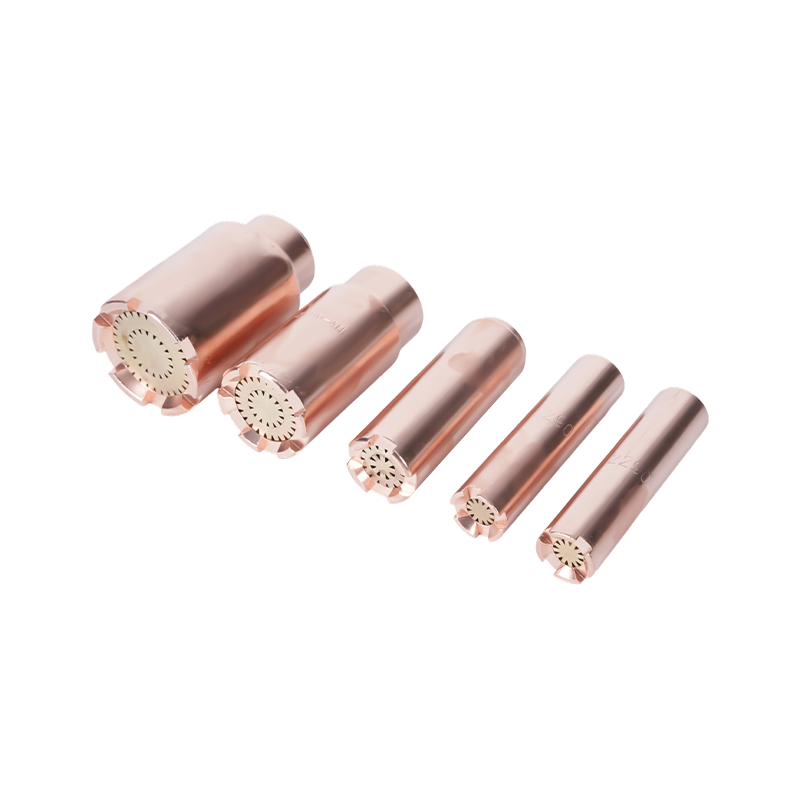
Heating tips eliminate the cutting oxygen channel entirely. They deliver a large-volume preheat flame only—no cutting jet—making them the correct tool for stress relieving, bending, straightening, brazing, and preheating thick weldments before arc welding. The oxy-acetylene and propane torch heating tips are available in multiple port configurations to match the heat spread required for different heating applications—from narrow concentrated heating for bending operations to broad-area heating for stress relief on large fabrications.
Pressure Settings by Tip Size
Setting gas pressures correctly is as important as selecting the right tip—an undersized pressure setting produces a weak, oxidizing cut; an oversized setting wastes gas, widens the kerf, and can cause turbulence in the cutting stream that roughens the cut face.
The general framework: oxygen pressure scales with tip size and material thickness, while acetylene pressure stays within a narrow range regardless of tip size. Acetylene pressure should never exceed 15 PSI at the regulator—above that threshold, the gas becomes unstable and the explosion risk rises significantly. Most production cutting work runs acetylene between 3 and 10 PSI depending on tip size, with the larger tip sizes toward the upper end.
Oxygen operates over a much wider range. Thin-material tips (000–0) typically run 20–35 PSI cutting oxygen; mid-range tips (1–2) commonly use 30–45 PSI; large-diameter tips for plate work (3–5) may require 40–60 PSI or more. Preheat oxygen—where the torch design separates preheat and cutting oxygen supplies—is set lower than cutting oxygen, typically 3–17 PSI depending on tip size. For the authoritative pressure reference broken down by tip size, orifice diameter, and cutting speed, the Harris cutting torch tip chart covering tip size selection, pressure settings, and cut quality reference provides manufacturer-grade data applicable across most standard tip series.
Always set pressures with the torch valves open and gas flowing—not with the valves closed. Static pressure readings are meaningless for setting working pressures; the regulator's delivery pressure drops under flow, and that working pressure is what determines flame quality at the tip.
Tip Maintenance, Cleaning, and When to Replace
A contaminated or damaged tip is the most common cause of poor cut quality that operators incorrectly attribute to gas pressure or technique. Tip maintenance is simple but requires the right tools and consistent practice.
Carbon buildup in the preheat ports is the most frequent issue. Spatter from the cutting process, combined with slightly fuel-rich flame settings, deposits carbon inside the ports and on the tip face. This restricts gas flow, distorts the preheat flame pattern, and causes the flame to lift or extinguish unpredictably. Clean preheat ports with a tip cleaner sized to the port diameter—not with a drill bit, which removes copper and enlarges the orifice. The cutting oxygen channel should be cleaned with a smooth wire that fits without forcing; any enlargement of the cutting orifice changes the flow characteristics the tip was calibrated for.
Tip face condition matters equally. The seating surface of the tip—where it meets the torch head—must be clean and undamaged for a gas-tight seal. A tip that leaks at the seat causes irregular flame behavior and is a fire hazard. If the tip face shows erosion, pitting, or burn-back damage from a flashback event, the tip should be replaced rather than reground. Regrinding alters the preheat port geometry and is not recommended for precision cutting work.
Flashback—where the flame travels backward into the torch body—is the most serious tip-related safety event. It produces a hissing or squealing sound, visible flame at the torch head, and rapid overheating of the handle. If a flashback occurs, close both torch valves immediately, then the cylinder valves. Inspect the tip, torch body, and hoses before relighting. A properly fitted oxy-acetylene flashback arrestor for torch protection installed at the torch inlets contains and extinguishes a flashback before it reaches the hoses or cylinders—an essential safety component on any oxy-acetylene setup operating near its design limits.