
 English
 中文简体
中文简体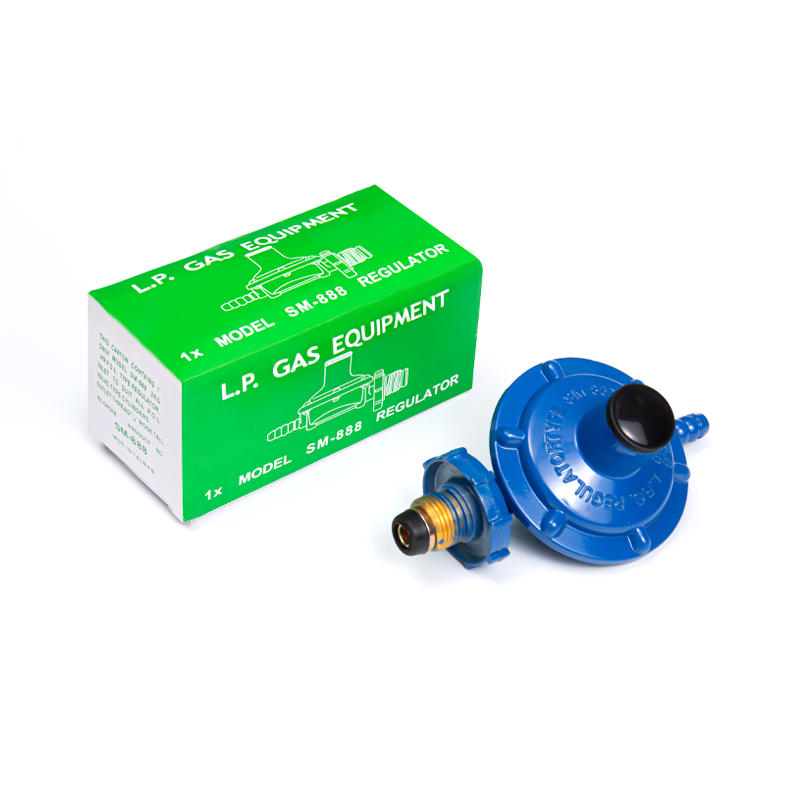
Content
- 1 Gas Pressure Regulators: What They Do and Why Getting It Right Matters
- 2 How Gas Pressure Regulators Work
- 3 Main Types of Gas Pressure Regulators
- 4 Key Specifications and How to Select the Right Regulator
- 5 Gas-Specific Regulator Requirements
- 6 Safety Standards and Certifications to Look For
- 7 Installation Best Practices for Gas Pressure Regulators
- 8 Maintenance, Inspection, and Service Life
- 9 Common Mistakes When Buying Gas Pressure Regulators
Gas Pressure Regulators: What They Do and Why Getting It Right Matters
A gas pressure regulator is a mechanical control device that reduces a high, variable inlet pressure to a steady, lower outlet pressure suitable for downstream equipment. Without a properly matched regulator, appliances, industrial processes, and laboratory instruments receive inconsistent or dangerously high gas pressure — causing equipment damage, unsafe combustion, inaccurate results, or catastrophic failure. Regulators are found in natural gas distribution lines, LPG cylinder systems, medical oxygen supply, welding equipment, semiconductor fabrication, and compressed air networks, among dozens of other applications.
Selecting the right regulator is not simply a matter of matching connection sizes. Inlet pressure range, required outlet pressure, flow capacity, gas type, body material, and safety certifications all determine whether a regulator performs reliably over its service life. This guide covers how regulators work, the main types available, selection criteria, and the most important factors in safe installation and maintenance.
How Gas Pressure Regulators Work
All gas pressure regulators operate on the same fundamental principle: a sensing element — typically a diaphragm — detects the downstream pressure and mechanically adjusts a valve to maintain the set outlet pressure regardless of changes in inlet pressure or flow demand.
The Diaphragm and Loading Mechanism
The diaphragm is a flexible membrane that separates the regulated downstream pressure from a reference chamber. On one side of the diaphragm, a spring (or in precision regulators, a reference gas pressure) applies a set loading force. On the other side, the outlet gas pressure acts. When downstream pressure drops below the set point — due to increased flow demand or falling inlet pressure — the diaphragm deflects, mechanically opening the control valve and allowing more gas to flow through. When downstream pressure rises, the diaphragm moves in the opposite direction, throttling the valve. This continuous balancing action maintains a near-constant outlet pressure.
Droop and Lockup
Two performance characteristics define regulator accuracy in practice. Droop (also called regulation) is the drop in outlet pressure that occurs as flow increases from zero to maximum rated flow — a well-designed regulator keeps droop to less than 10% of the set pressure across its full flow range. Lockup pressure is the outlet pressure rise that occurs when flow drops to zero (dead-end condition); some pressure rise is inevitable, and a lockup of 5–15% above set pressure is typical for spring-loaded regulators. Applications requiring very tight pressure control — such as gas chromatography or semiconductor process gas delivery — use dome-loaded or electronic regulators that minimize both droop and lockup.
Single-Stage vs. Two-Stage Pressure Reduction
In a single-stage regulator, the full pressure drop from inlet to outlet occurs across one valve seat. This means that as the cylinder or supply pressure depletes over time, the outlet pressure tends to drift — typically rising slightly as inlet pressure falls. A two-stage regulator performs the pressure reduction in two steps: the first stage reduces inlet pressure to an intermediate level (usually a fixed, internally set value), and the second stage regulates down to the final outlet pressure. Two-stage regulators deliver significantly more stable outlet pressure over the full depletion of a gas cylinder and are the standard choice for laboratory, welding, and precision industrial applications where consistent delivery pressure is critical.
Main Types of Gas Pressure Regulators
Gas pressure regulators are manufactured in a wide range of designs tailored to specific gases, pressure ranges, flow capacities, and environmental conditions. Understanding the major categories prevents misapplication.
Line Pressure Regulators
Installed in-line within a gas distribution system, these regulators reduce network or pipeline pressure to usable service pressure. Natural gas distribution uses a hierarchy of regulators — city gate stations reduce transmission pressure from up to 70 bar (1,000 psi) down to district distribution pressure, and a further service regulator at each building reduces pressure to the 20–25 mbar (0.3 psi) range suitable for domestic appliances. Line regulators handle high flow rates continuously and are typically non-adjustable, factory-set to a fixed outlet pressure.
Cylinder Regulators
Cylinder regulators attach directly to compressed gas cylinders and reduce the high storage pressure (which may exceed 200–300 bar for industrial gases) to a usable working pressure. They are available in single-stage and two-stage versions and are specific to the gas service — oxygen, acetylene, nitrogen, argon, carbon dioxide, and other gases each have dedicated regulator designs with connection types that prevent cross-connection between incompatible gases. This is a deliberate safety measure mandated by standards including EN ISO 2503 (Europe) and CGA V-1 (North America).
LPG and Propane Regulators
LPG (liquefied petroleum gas — propane or butane) regulators handle a gas that exists as a liquid in the cylinder and vaporizes on demand. The inlet pressure varies with temperature — a propane cylinder in summer may present 10–12 bar at the regulator inlet, while the same cylinder in cold weather (below 0°C) may provide only 2–3 bar. LPG regulators must handle this variable inlet reliably. They are classified by outlet pressure: low-pressure regulators (28–37 mbar for domestic appliances), medium-pressure regulators (0.5–4 bar for commercial catering equipment), and high-pressure regulators (above 4 bar for industrial burners and processes).
High-Purity and Specialty Gas Regulators
Used in laboratory, semiconductor, pharmaceutical, and research applications, high-purity regulators are manufactured to minimize internal surface area, eliminate dead volume, and prevent contamination or reaction between the regulator materials and the gas. Bodies are typically 316L stainless steel with electropolished internal surfaces; diaphragms use inert polymers (PTFE, PCTFE) or stainless steel. These regulators maintain gas purity to 99.9999% (6N) and above and are incompatible with general industrial applications due to cost and material sensitivity.
Back Pressure Regulators
Unlike standard forward-pressure regulators that maintain a set downstream pressure, back pressure regulators maintain a set upstream pressure by venting or bypassing excess gas when the upstream pressure exceeds the set point. They are used in reactor vessels, chemical process systems, and sampling systems where upstream pressure must be held constant regardless of downstream conditions.

Key Specifications and How to Select the Right Regulator
Misapplication is the leading cause of regulator failure and gas system incidents. Matching a regulator to its application requires evaluating several interdependent parameters simultaneously.
| Specification | What It Defines | Typical Range | Selection Guidance |
|---|---|---|---|
| Inlet pressure (max) | Maximum supply pressure the body can safely contain | 0.5 bar – 300+ bar | Must exceed max supply pressure with safety margin |
| Outlet pressure range | Adjustable or fixed delivery pressure range | 20 mbar – 300 bar | Must include required set pressure with adjustment room |
| Flow capacity (Cv or Kv) | Maximum gas flow at rated conditions | Varies widely by design | Size to peak flow demand; avoid oversizing (instability) |
| Body material | Compatibility with gas chemistry and environment | Brass, SS 316L, aluminum, nylon | Must be inert to the specific gas service |
| Seat and seal material | Determines gas compatibility and temperature range | BUNA-N, EPDM, PTFE, PCTFE, SS | Critical for aggressive, oxidizing, or reactive gases |
| Pressure relief / PRV | Built-in overpressure protection | Set at 110–150% of outlet set pressure | Required for many codes; verify if needed for application |
Matching Flow Capacity to System Demand
Flow capacity is expressed as a Cv (flow coefficient) value — the volume of water in US gallons per minute that flows through the fully open valve at a pressure drop of 1 psi. For gas applications, Cv is converted to volumetric gas flow using standard correction factors for gas density and pressure ratio. A regulator should be sized so that at maximum system flow demand, it operates at 60–80% of its rated Cv. Operating a regulator at or near its maximum flow rating causes excessive droop and unstable pressure control; operating at less than 10% of rated Cv causes hunting (oscillation) and accelerated seat wear.
Body Material and Gas Compatibility
Brass is the standard body material for natural gas, LPG, inert gases (nitrogen, argon, helium), and general compressed air applications. It offers good corrosion resistance and is easy to machine to close tolerances. Brass must never be used with acetylene at pressures above 1.5 bar — copper and its alloys react with acetylene to form explosive copper acetylide compounds. Stainless steel (316L) is required for corrosive gases, high-purity applications, and chlorine, hydrogen sulfide, or ammonia service. Aluminum body regulators are used where weight is a priority, such as portable oxygen equipment, but are unsuitable for aggressive chemical environments.
Gas-Specific Regulator Requirements
Different gases impose different material, design, and safety requirements on regulators. Using a regulator outside its designated gas service is a serious safety violation, not merely a performance issue.
| Gas | Body Material | Seat/Seal Material | Special Requirements |
|---|---|---|---|
| Oxygen | Brass or SS 316L | PTFE, PCTFE, or nylon | Must be oxygen-cleaned; no hydrocarbon contamination |
| Acetylene | Steel or SS (no copper alloys) | BUNA-N | Max outlet pressure limited to 1.5 bar (acetylide formation risk) |
| Hydrogen | SS 316L | PTFE, metal-to-metal seats | Hydrogen embrittlement resistance; low permeation seals |
| Chlorine / HCl | Hastelloy C or PTFE-lined | PTFE or Viton | Highly corrosive; dedicated corrosion-resistant design required |
| Natural gas / LPG | Brass or aluminum | BUNA-N or EPDM | CE/ATEX marking required in EU; UL/CSA approval in North America |
| Ammonia (NH₃) | SS 316L (no copper or zinc) | PTFE or EPDM | Ammonia attacks copper and zinc alloys; dedicated refrigeration design |
Oxygen service deserves particular attention. Oxygen in contact with hydrocarbon contamination (oil, grease, or organic compounds) at elevated pressure can ignite spontaneously — a phenomenon known as adiabatic compression ignition. Oxygen regulators must be thoroughly cleaned to remove all traces of hydrocarbons before use and must never be lubricated with standard oils or greases. Only PTFE tape or oxygen-compatible thread compounds should be used on oxygen regulator fittings.
Safety Standards and Certifications to Look For
Gas pressure regulators used in commercial, industrial, and residential applications are subject to mandatory safety certifications in most jurisdictions. Using non-certified or counterfeit regulators voids insurance, violates gas safety regulations, and creates genuine risk of fire, explosion, or toxic gas release.
North American Standards
- UL 144 — UL standard for LP-Gas pressure regulators used in the U.S. Covers materials, construction, performance, and markings.
- CSA 6.18 — Canadian Standards Association standard for gas pressure regulators, widely accepted alongside UL in North American markets.
- CGA V-1 — Compressed Gas Association standard for cylinder valve outlet and inlet connections, ensuring gas-specific connections that prevent cross-service use.
- ANSI Z21.18 / CSA 6.3 — Standard for gas appliance pressure regulators used on natural gas and LP-gas systems in residential and commercial buildings.
European and International Standards
- EN 334 — European standard for gas pressure regulators used in transmission and distribution networks, covering inlet pressures up to 100 bar.
- EN 12864 — Standard for low-pressure, non-adjustable regulators for use with LPG butane, propane, and their mixtures.
- EN ISO 2503 — International standard for pressure regulators used on gas cylinders with inlet pressures up to 300 bar.
- CE marking with PED (Pressure Equipment Directive 2014/68/EU) — Required for pressure equipment including regulators placed on the European market above defined pressure-volume thresholds.
Installation Best Practices for Gas Pressure Regulators
Even a correctly specified regulator can underperform or fail if installed incorrectly. The following practices apply across most gas pressure regulator installations.
- Verify orientation: Most regulators have a defined installation orientation — typically with the diaphragm chamber facing upward or in a specified horizontal position. Incorrect orientation allows condensate or debris to accumulate in the sensing chamber, impairing diaphragm movement and causing pressure instability.
- Install an upstream strainer or filter: Pipeline scale, weld slag, and particulates are among the leading causes of regulator seat damage and leakage. A mesh strainer with a 40–100 micron rating installed immediately upstream protects the valve seat and extends service life significantly.
- Provide adequate straight pipe runs: Turbulent flow from nearby elbows, tees, or valves can cause pressure sensing errors. Install the regulator with at least 10 pipe diameters of straight pipe upstream and 5 pipe diameters downstream where possible.
- Isolation and bypass valves: Install manual isolation valves upstream and downstream of the regulator to allow safe removal for maintenance or replacement without interrupting the entire system. On critical supply systems, a parallel bypass with its own regulator allows continuous operation during maintenance.
- Pressure gauge installation: Install calibrated pressure gauges immediately downstream of the regulator and, where possible, upstream as well. This allows rapid diagnosis of regulator performance issues and verification of set pressure after any adjustment.
- Avoid mechanical stress on connections: Do not use the regulator body as a structural support for pipework. Pipe weight and thermal expansion forces transmitted through the connections cause body distortion, seal leakage, and premature diaphragm fatigue.
Vent Line Placement for Regulators with Relief Vents
Many regulators include an atmospheric vent on the diaphragm chamber to prevent pressure buildup behind the diaphragm. For combustible or toxic gases, this vent must be piped to a safe outdoor location — never left open indoors. The vent line must be protected from insect ingress, rain entry, and ice formation. A vent line that becomes blocked can cause regulator malfunction or diaphragm rupture.
Maintenance, Inspection, and Service Life
Gas pressure regulators are mechanical devices with wear components that require periodic inspection and replacement to maintain safe, accurate operation. Neglecting maintenance is a disproportionate safety risk given the low cost of regulator service kits relative to the consequences of regulator failure.
Recommended Inspection Intervals
Domestic and light commercial gas regulators (natural gas service regulators, LPG cylinder regulators) should be visually inspected annually and functionally tested every 5 years in most jurisdictions. Gas utility regulations in many countries mandate inspection and replacement every 10 years for domestic service regulators. Industrial regulators on critical process lines are typically scheduled for complete overhaul — diaphragm replacement, seat inspection, and spring check — every 2–3 years or at defined operating hours, whichever occurs first.
Signs That a Regulator Needs Attention
- Creep or "passing": Outlet pressure continues to rise slowly when all downstream equipment is closed (dead-end condition). Indicates a worn or damaged valve seat that is not fully sealing. Left unaddressed, creep can over-pressurize downstream equipment.
- Excessive droop: Outlet pressure drops significantly when demand increases — indicating a fatigued spring, worn diaphragm, or undersized regulator for the actual flow demand.
- Audible gas leak from vent: Continuous gas flow from the atmospheric vent indicates diaphragm perforation. The regulator must be taken out of service immediately.
- Hunting or chattering: Rapid oscillation of outlet pressure, often audible as a buzzing or chattering sound, typically caused by oversizing (regulator too large for actual flow), a damaged seat, or flow turbulence upstream.
- External corrosion or physical damage: Pitting, corrosion, or impact damage to the body or diaphragm cover signals that pressure containment integrity may be compromised. Visual inspection should be part of any routine gas system check.
When to Replace Rather Than Repair
For domestic gas regulators priced below $30–$50, replacement is almost always more economical and reliable than repair. For industrial and high-purity regulators costing $200–$2,000 or more, manufacturer-supplied overhaul kits — typically including a new diaphragm, spring, seat, and all O-rings — allow cost-effective refurbishment. Any regulator that has been exposed to a reverse pressure event (downstream pressure exceeding inlet pressure) must be replaced, not repaired, as diaphragm integrity and seat condition cannot be reliably assessed after such an event without specialist inspection equipment.
Common Mistakes When Buying Gas Pressure Regulators
The market for gas pressure regulators includes many low-cost, non-certified products that look identical to compliant units but lack the material quality, testing, and safety features required for safe gas service. These purchasing errors are consistently costly:
- Buying by connection size alone: A 1/4" NPT inlet regulator suitable for compressed air at 8 bar is not suitable for natural gas or oxygen at 8 bar. Gas type, materials, and certifications are more critical than physical dimensions.
- Using a universal or "multi-gas" regulator on oxygen service: Regulators not specifically oxygen-cleaned and rated create a serious fire and explosion risk in oxygen service regardless of stated pressure ratings.
- Oversizing for perceived safety margin: A larger regulator does not mean safer or more reliable operation. Oversizing causes instability, accelerated seat wear, and poor pressure control.
- Ignoring outlet pressure range in adjustable regulators: Adjustable regulators have a defined outlet pressure range. Setting the adjusting screw beyond the spring's range does not achieve higher pressure — it strains the spring and destroys calibration accuracy.
- Purchasing uncertified products for regulated applications: In most countries, gas appliances and components including regulators used in buildings or supplied from public networks must carry the applicable national approval mark. Using uncertified regulators in these applications constitutes a regulatory violation and may invalidate building insurance.