
 English
 中文简体
中文简体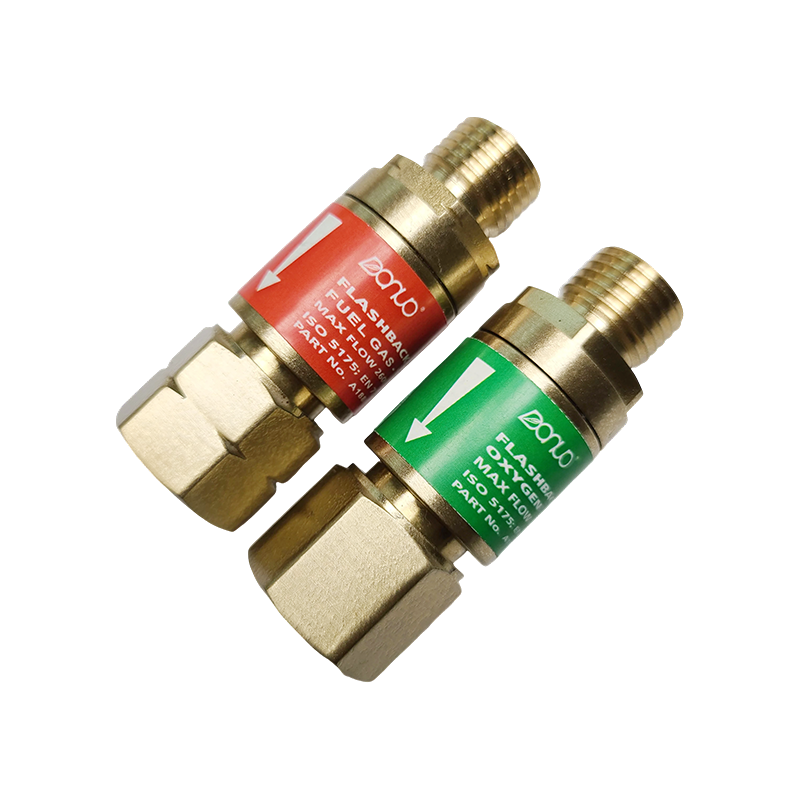
The Short Answer—and Why It's Not Simple
Yes, stainless steel can be welded to mild steel. The joint is achievable, structurally sound when executed correctly, and appears in real fabrication work across industries—exhaust systems, food processing equipment, structural supports, marine fittings, and architectural metalwork all regularly combine these two materials. The short answer is not in question.
What makes the answer complicated is everything that follows it. Stainless steel and mild steel differ in thermal expansion rate, thermal conductivity, chemical composition, and corrosion behavior. Each of those differences introduces a failure mode that a standard same-material weld doesn't face. Weld the joint with the wrong filler and the heat-affected zone becomes brittle. Manage heat incorrectly and the stainless warps while the mild steel pulls in the opposite direction. Leave the joint unsealed and galvanic corrosion attacks the mild-steel side within months of outdoor exposure. Getting the short answer right requires understanding all of these variables before the arc is struck.
Content
The Metallurgical Challenge: Heat, Expansion, and Dilution
The core difficulty is that stainless steel and mild steel respond to heat differently in three compounding ways.
First, thermal expansion. Austenitic stainless steels (the 304 and 316 grades most commonly encountered in fabrication) expand roughly 50% more than mild steel per degree of temperature rise. When you weld them together and both sides heat unevenly, the stainless side grows more than the mild-steel side during the weld and contracts more during cooling. That differential movement creates residual stress at the joint—stress that, if the weld deposit isn't ductile enough to absorb it, results in cracking as the assembly cools.
Second, thermal conductivity. Mild steel conducts heat away from the weld zone roughly three times faster than stainless steel. This means heat concentrates on the stainless side of the joint, causing it to stay hotter longer while the mild-steel side cools quickly. The result is uneven heat distribution, uneven distortion, and a tendency for the stainless side to overheat if the welder isn't actively managing heat input.
Third, weld pool dilution. As the two base metals melt into the weld pool, their chemistries mix. If the filler metal chemistry isn't chosen to accommodate this dilution—absorbing carbon from the mild steel and balancing the chromium-nickel content from the stainless—the resulting weld deposit can contain brittle martensite or sigma phase structures that compromise both strength and ductility. This is why filler selection is the single most important technical decision in this type of joint.
Filler Metal Selection: ER309L as the Standard Choice
The filler metal bridges two chemically incompatible base materials. It must be formulated to produce a weld deposit that is compatible with both sides of the joint after dilution has occurred—not just the stainless side or the mild-steel side independently.
ER309L is the industry-standard filler for austenitic stainless-to-mild-steel joints. The 309L grade contains higher chromium (23–25%) and nickel (12–14%) content than standard stainless fillers, specifically to account for dilution with carbon steel. When the mild steel mixes into the weld pool and reduces the alloy content, the elevated starting chemistry of the 309L deposit compensates, producing a final weld composition that remains austenitic, ductile, and corrosion-resistant. The "L" designation indicates low carbon content—an important factor that reduces the risk of sensitization (carbide precipitation at grain boundaries) in the heat-affected zone of the stainless side. For detailed filler metal selection guidance across different stainless grades, the Hobart Brothers technical guide on welding stainless steel with recommended filler metal selection by application provides grade-specific recommendations that account for both mechanical and corrosion performance requirements.
ER312 is the secondary choice for joints involving unknown mild-steel composition or higher carbon content. The 312 grade has even higher ferrite content than 309L, giving it greater resistance to hot cracking in high-dilution scenarios. It is more expensive and less widely stocked than 309L, making it the correct choice when the base material chemistry is uncertain rather than the routine first pick.
What you must not use: mild-steel filler (ER70S-6 wire or equivalent). Mild-steel filler on a stainless-to-mild-steel joint produces a weld deposit that will rust at the joint line. The stainless side is fine; the weld itself corrodes. Standard stainless filler (ER308L, the same-material filler for 304 stainless to 304 stainless) is also unsuitable—it lacks the elevated alloy content needed to survive dilution with the carbon steel and can produce a weld with inadequate corrosion resistance on the stainless side.

Welding Processes: TIG, MIG, and Oxy-Acetylene Options
Three processes are commonly used for stainless-to-mild-steel joints, each with a distinct advantage profile.
TIG (GTAW) is the preferred process for precision work, thin-section material (under 3 mm), and applications where weld appearance matters—food service equipment, architectural panels, and visible structural joints. TIG gives the operator the greatest control over heat input, puddle size, and filler addition rate. The argon shielding gas (100% argon for stainless work) produces a clean weld with minimal spatter and no slag. The trade-off is speed and skill requirement: TIG demands simultaneous control of amperage, torch angle, travel speed, and filler addition, making it unsuitable for high-production environments and operators who haven't developed proficiency with the process.
MIG (GMAW) with ER309L wire is the production choice for structural and heavy fabrication work. MIG is faster than TIG, easier to learn, and capable of handling thicker material sections efficiently. The shielding gas for stainless-to-mild-steel MIG work is typically a high-argon mix (98% Ar / 2% CO₂ or a trimix of argon, helium, and CO₂); standard mild-steel shielding gases with high CO₂ content oxidize the stainless side and degrade corrosion resistance at the weld zone.
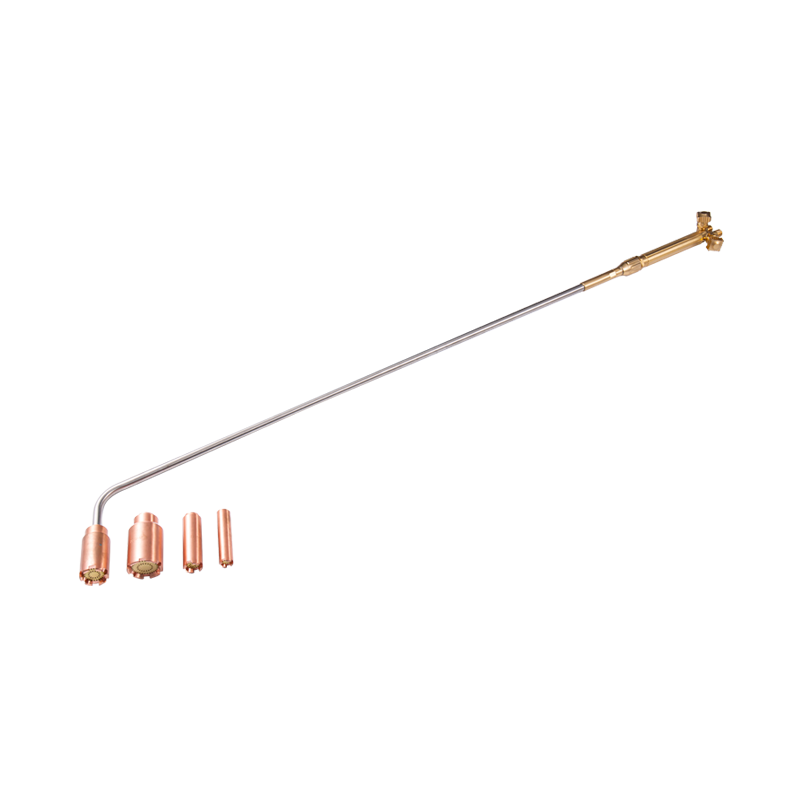
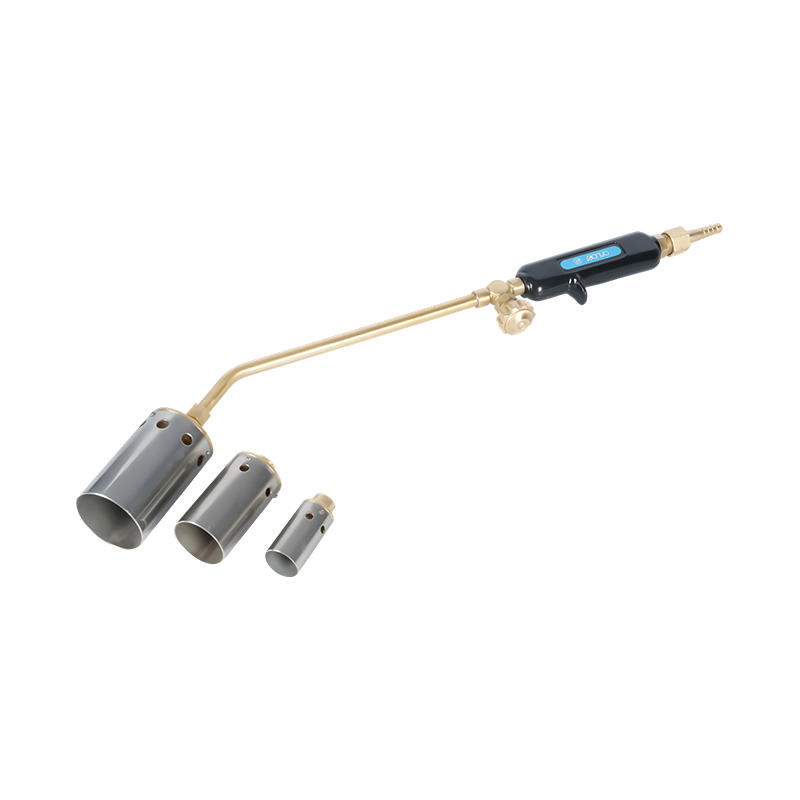
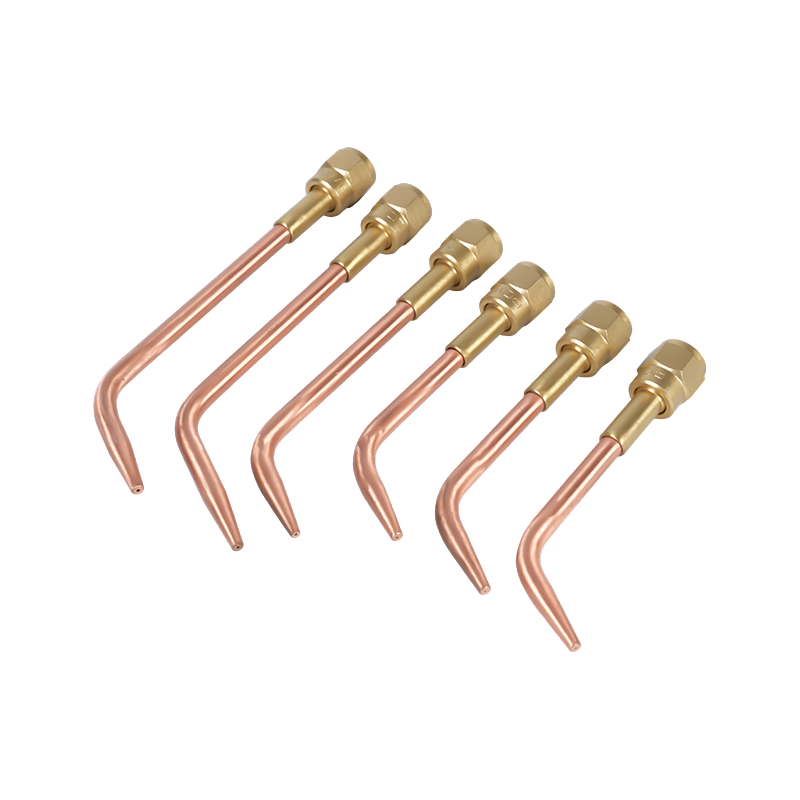
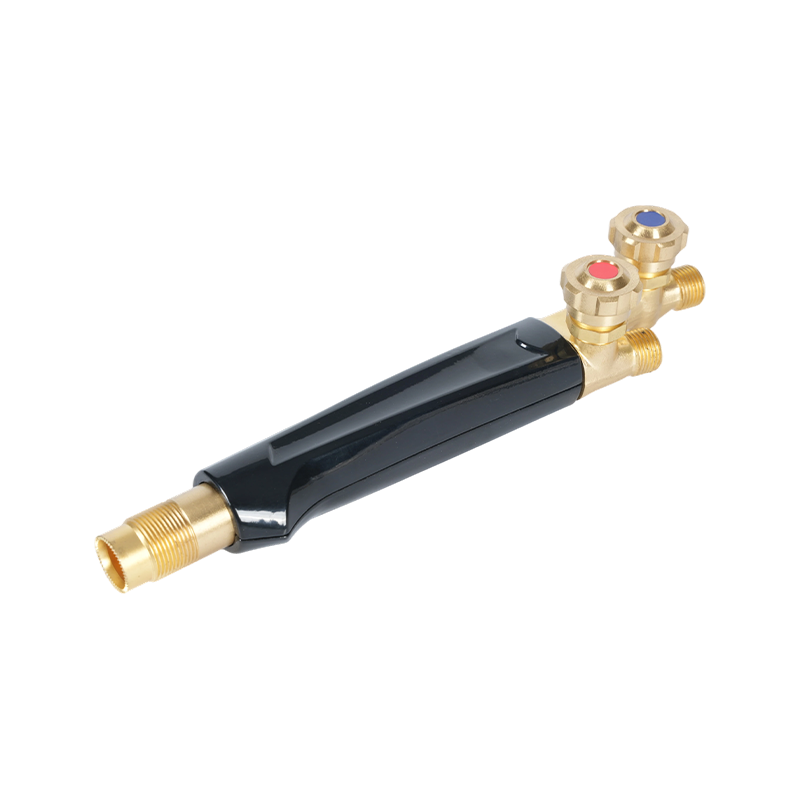
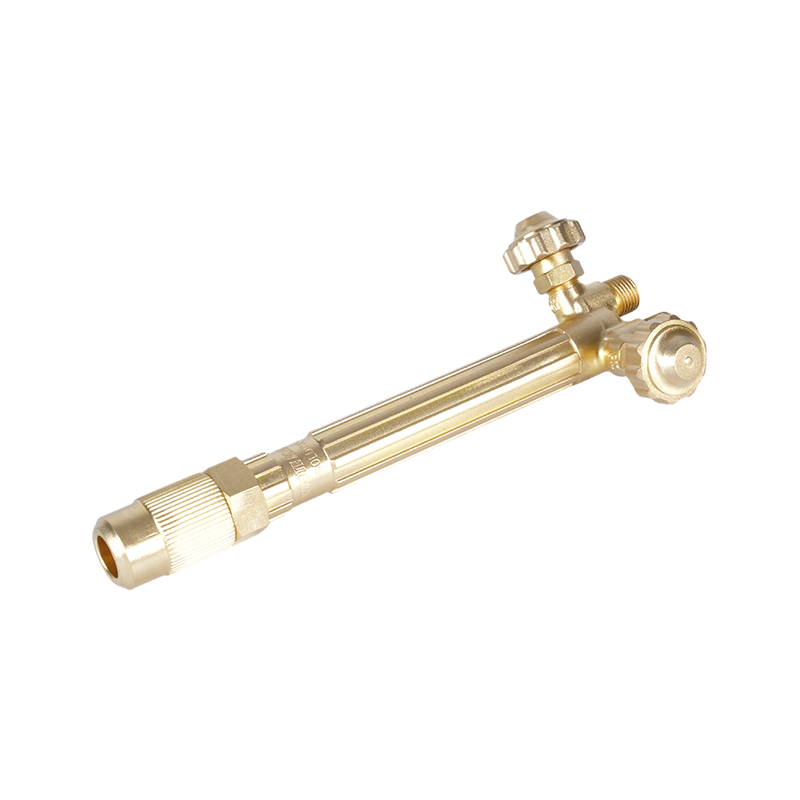
Oxy-acetylene welding is viable for thin sheet and small-section work where TIG equipment is unavailable. The process requires careful heat management because the open flame delivers heat less precisely than an electric arc, making it easier to overheat the stainless side. A neutral flame—oxygen-to-acetylene ratio of approximately 1:1—is mandatory; an oxidizing flame attacks the chromium oxide layer on the stainless and introduces porosity. A small oxy-acetylene welding and heating torch for precision work gives the operator the fine flame control needed for thin dissimilar-metal joints, while the portable gas welding and heating torch for on-site use extends this capability to field repair and site fabrication where arc equipment isn't available. For the welding tips themselves, heavy-duty oxy-acetylene welding torch tips handle heavier section work, while lightweight oxy-acetylene welding torch tips suit thinner gauge sheet metal applications where heat control is the priority.
| Process | Best For | Filler | Skill Level | Heat Control |
|---|---|---|---|---|
| TIG (GTAW) | Thin sheet, precision, visible joints | ER309L rod | Advanced | Excellent |
| MIG (GMAW) | Structural, heavy fabrication, production | ER309L wire | Intermediate | Good |
| Oxy-Acetylene | Thin sheet, field repair, no-power sites | 309L rod | Intermediate | Moderate |
Heat Control and Distortion Management
Heat management in stainless-to-mild-steel welding is more demanding than same-material welding because the two sides respond to heat at different rates. The goal is to deliver enough heat to achieve fusion without allowing the stainless side to dwell at high temperature long enough for sensitization or excessive distortion to occur.
Several techniques address this directly. Backstep welding—running short weld segments in the direction opposite to overall travel—distributes heat more evenly along the joint than continuous forward welding, reducing the heat concentration that causes stainless to warp. Intermittent heating, particularly relevant for oxy-acetylene work, means applying heat, pausing to let the stainless side shed some of its temperature, then resuming. This prevents the stainless from accumulating heat beyond its distortion threshold.
Clamping and fixturing are not optional for longer joints. Because the stainless side expands more and cools more slowly, an unfixed joint will pull and twist as welding progresses. Tacking at regular intervals before running full beads, and securing the assembly to a flat fixture plate or strongback, keeps the joint aligned through thermal cycling. Use stainless-specific wire brushes on the stainless side and dedicated mild-steel brushes on the other—cross-contamination of carbon steel particles into the stainless surface creates rust spots that develop into corrosion pits over time.
When running multiple weld passes, allow the joint to cool between passes. Stacking hot pass on hot pass on a stainless-to-mild-steel joint compounds heat input and risks driving both sensitization on the stainless and excessive grain growth in the mild-steel heat-affected zone. The acetylene flashback arrestor for welding safety should be fitted at the torch inlet on any oxy-acetylene setup used for extended welding operations, where repeated heating cycles can create pressure fluctuations that trigger flashback events.
Post-Weld Treatment: Protecting the Joint Long-Term
A structurally sound stainless-to-mild-steel weld is only half of the job. Left untreated, the joint will fail from corrosion long before it fails mechanically—because the two metals in electrical contact with moisture present create a galvanic cell that accelerates rust on the mild-steel side.
Galvanic corrosion occurs because stainless steel is more electrochemically noble than mild steel. In the presence of an electrolyte (moisture, humidity, salt water), the mild steel acts as the sacrificial anode and corrodes faster than it would in isolation. The more aggressive the environment, the faster this process runs. For indoor dry applications, galvanic effects are minimal. For outdoor, marine, or high-humidity environments, the joint needs active protection.
On the stainless side, passivation—treatment with nitric or citric acid per ASTM A967—restores the chromium oxide layer disrupted by welding heat, returning the stainless surface to its designed corrosion-resistance level. This step is standard practice in food service, pharmaceutical, and marine stainless fabrication and should not be skipped wherever the stainless surface will be exposed to corrosive agents.
On the mild-steel side, sealing and coating are the primary defenses. Paint, epoxy primer, or zinc-rich primer applied to the mild-steel side interrupts the moisture pathway that drives galvanic corrosion. For immersion or marine applications, a zinc sacrificial anode bonded to the mild-steel side provides electrochemical protection by corroding preferentially in place of the steel. Sealing the weld toe with an appropriate sealant prevents moisture ingress at the joint line itself—often the most vulnerable point where crevice corrosion can begin even when the surrounding surfaces are coated.
Executed with the right filler metal, controlled heat input, and proper post-weld treatment, a stainless-to-mild-steel joint will match the service life of the surrounding structure. Skipping any one of these steps shortens that life measurably—which is why the short answer ("yes, you can") is only useful when it comes with the full process behind it.