
 English
 中文简体
中文简体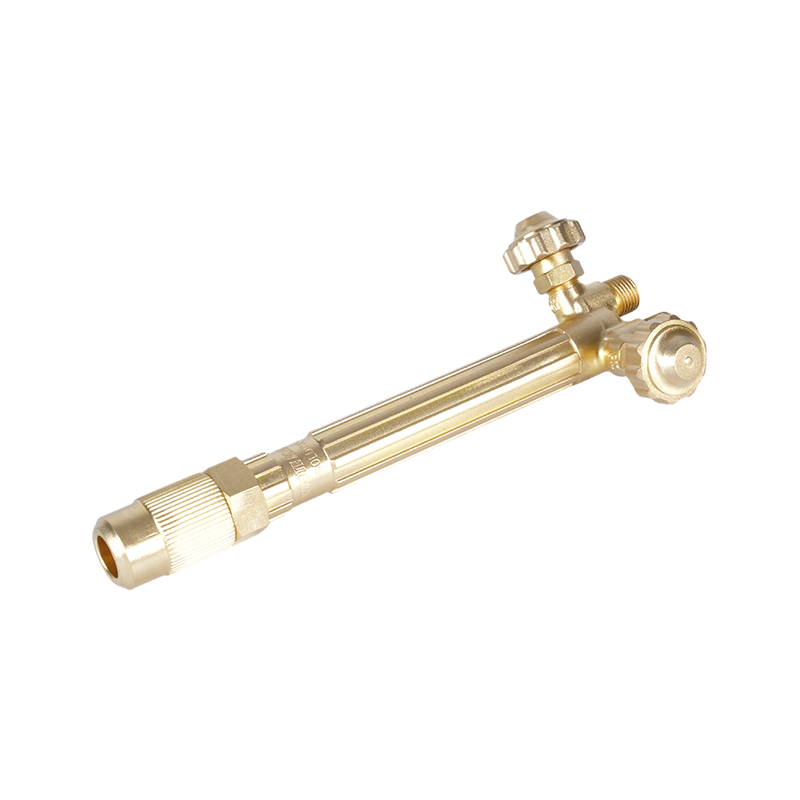
Content
- 1 What an Oxy-Acetylene Welding Torch Actually Does
- 2 Anatomy of the Torch: Handle, Tips, and Attachments
- 3 Choosing the Right Torch Tip for the Job
- 4 Setting Up and Lighting the Torch Safely
- 5 Backfire vs Flashback: Know the Difference
- 6 Maintenance That Extends Torch Life
- 7 Oxy-Acetylene vs Other Welding Methods
What an Oxy-Acetylene Welding Torch Actually Does
A torch flame burning acetylene in pure oxygen reaches roughly 6,000°F, hot enough to melt steel, cast iron, and most nonferrous alloys in seconds. The heat comes from a two-stage combustion process: the inner cone burns hottest where oxygen and fuel mix at the tip, while the outer envelope finishes combustion in ambient air. That inner cone is where the actual welding happens — filler rod melts into a shared molten pool as the operator moves the torch along the joint.
Unlike arc processes, there's no electrical circuit involved. That's precisely why the equipment stays relevant on job sites without power access, in mobile repair trucks, and in shops doing brazing or metal forming where flame control matters more than deposition speed. The tradeoff is heat-affected zone size — oxy-acetylene runs hotter and slower than a MIG or TIG arc, so it suits thinner sections and repair work better than high-volume production welding.
Anatomy of the Torch: Handle, Tips, and Attachments
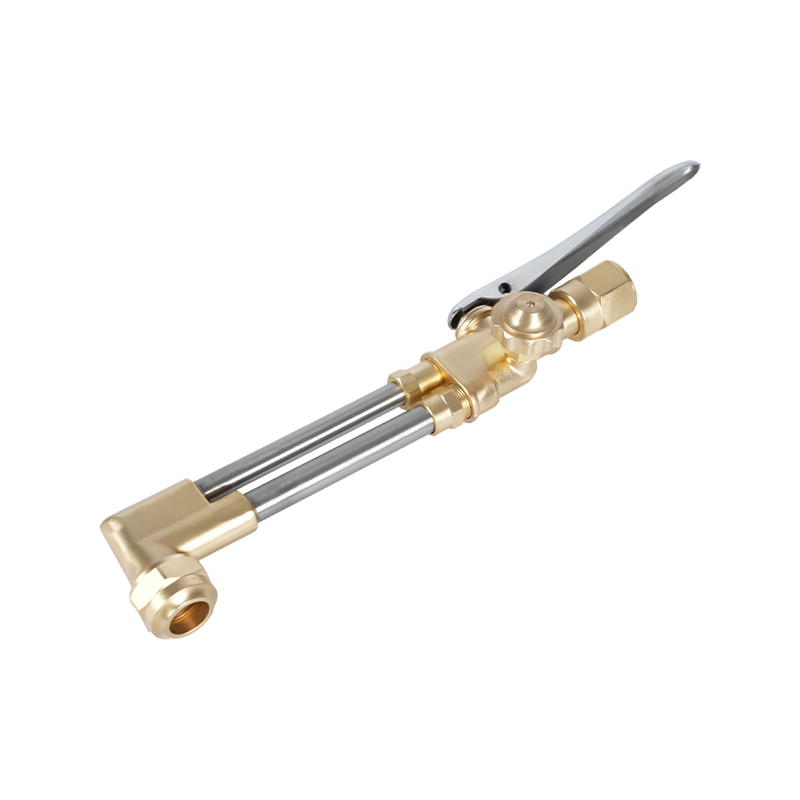
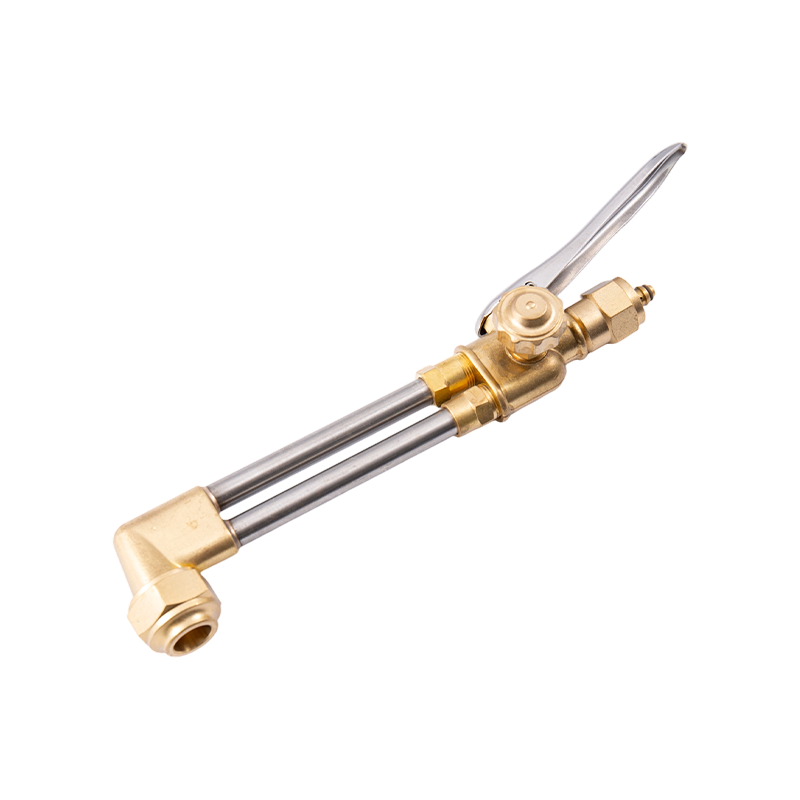
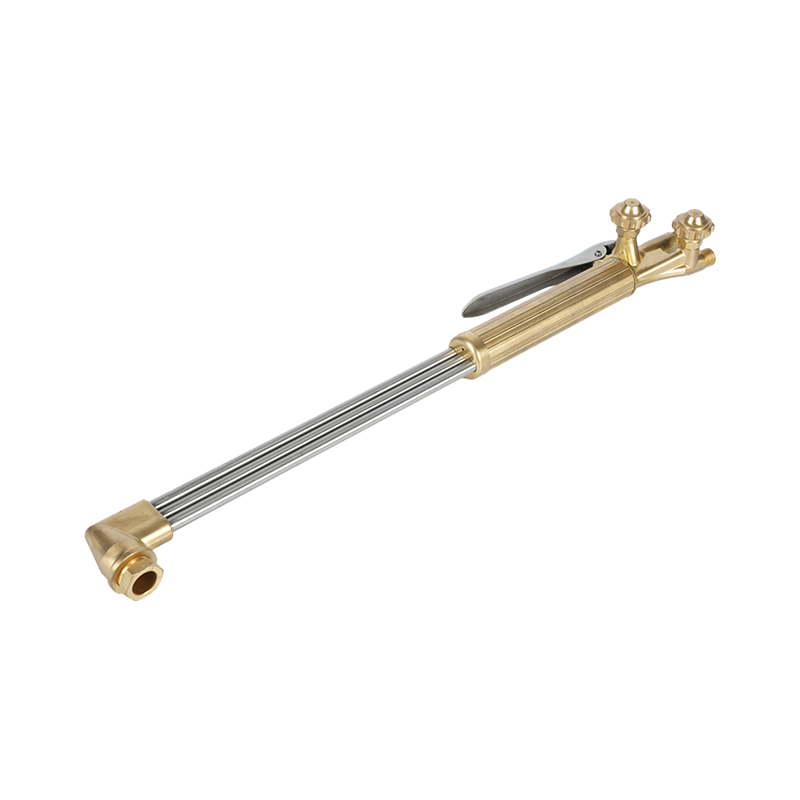
Every setup starts with the torch handle, the body that mixes oxygen and acetylene before they reach the tip. Handles come in light, medium, and heavy-duty ratings, and the rating should match the thickness range you actually cut or weld — an undersized handle chokes gas flow on thick material, while an oversized one wastes fuel on fine work. Brass construction is standard because it resists the corrosive effect of acetylene better than most alternatives, and it dissipates heat away from the operator's hand during extended use.
For shops running multiple joint sizes through the same setup, brass welding torch handles built for continuous acetylene use hold up better under repeated ignition cycles than lighter-duty alternatives, since the valve seats see less wear over time.
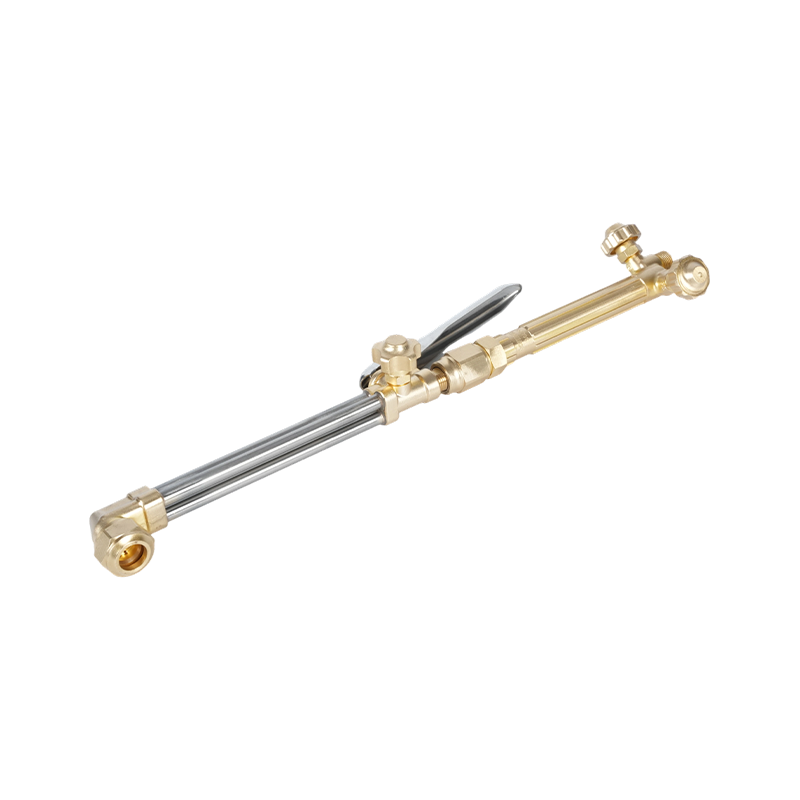
Attachments swap onto the handle to change function: a welding tip for fusion work, a cutting attachment with an oxygen-blast trigger, or a rosebud tip for heating a wide area. Each attachment threads onto the same handle body, so one handle can cover welding, cutting, and heating jobs with a change of parts rather than a change of equipment.
Choosing the Right Torch Tip for the Job
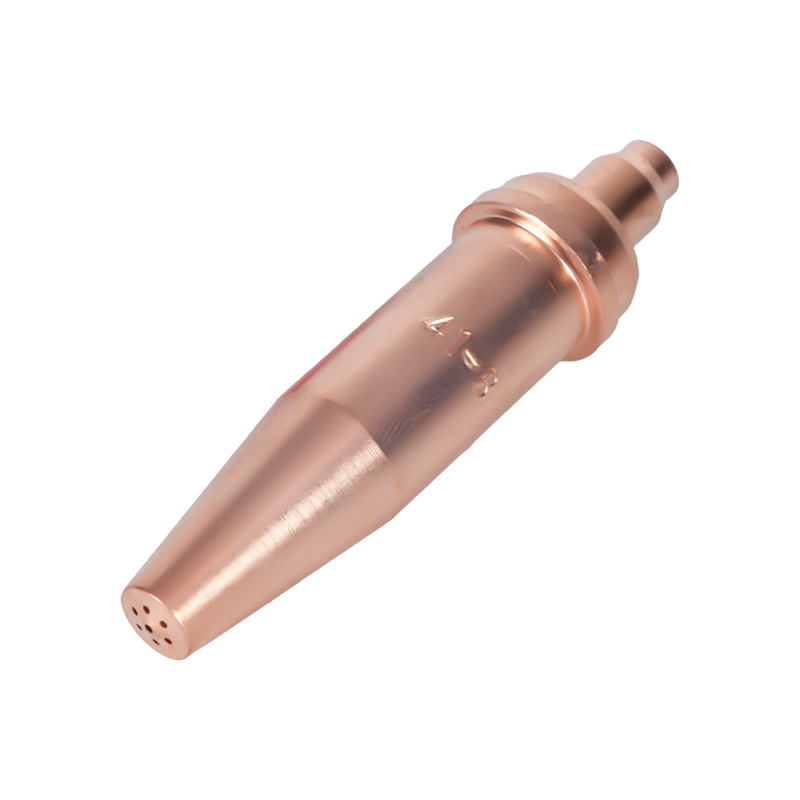
Tip size determines gas flow rate, and gas flow rate determines how much heat reaches the workpiece. There's no single industry-wide numbering system across manufacturers, so tip sizes are typically matched by metal thickness rather than a universal number — a supplier's chart converts thickness into the correct orifice size for that specific tip family. Running a tip too small for the material starves the weld of heat and produces poor fusion; running one too large overheats thin stock and burns through.
- Thin sheet (under 1/16"): smallest available tip, lower working pressure
- Medium plate (1/16" to 1/4"): mid-range tip, moderate pressure on both gases
- Heavy plate (over 1/4"): largest tip rated for the handle, higher oxygen flow
Tip material and orifice design also affect flame stability. heavy-duty welding torch tips engineered for stable flame control resist the popping and backfiring that undersized or worn tips are prone to, particularly on longer welding runs where flame consistency matters most.
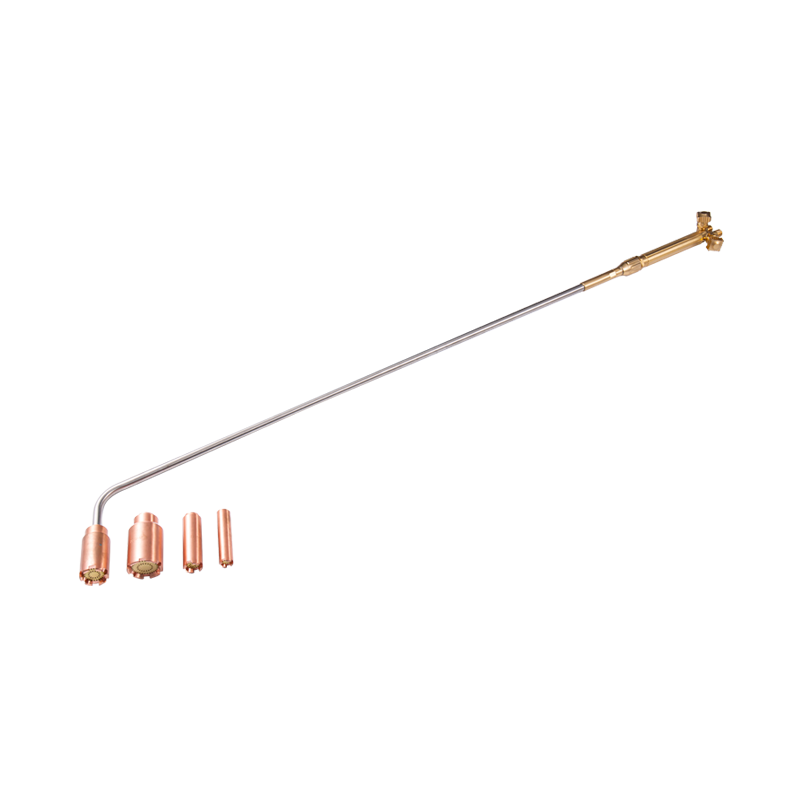
For brazing, preheating rusted fasteners, or bending stock, a dedicated heating torch outperforms a standard welding tip because it's built for a broader, lower-velocity flame rather than a concentrated cutting or fusion jet. A compact heating torch suited for brazing and preheating tasks gives more even heat distribution across a wider area than repurposing a welding tip for the same job.

Setting Up and Lighting the Torch Safely
Before anything connects to the torch, crack each cylinder valve briefly to blow dust out of the outlet. Attach regulators with a wrench, never pliers, and check that hose connections seat fully — oxygen fittings and acetylene fittings use different thread directions specifically to prevent cross-connection.
Regulator pressure should be set to the tip manufacturer's chart, not guessed. Working pressure runs lower for oxy-acetylene than most operators expect, and acetylene should never exceed 15 psig under any circumstance — pushing it higher risks decomposition inside the cylinder itself. A stable dual-stage regulator holds that setting through pressure drops as the cylinder empties, which matters more on long jobs than most operators realize. dual-stage regulators built for stable oxy-acetylene pressure control reduce the pressure creep that causes flame character to drift mid-weld.
To light the torch: open the acetylene valve slightly, ignite with a striker (never a lighter or matches held close to the tip), then slowly open the oxygen valve while adjusting the acetylene flow until the flame stops trailing black smoke. A properly tuned neutral flame shows a sharp, well-defined inner cone with no feather at its edge — that's the flame you weld with for most steel work.
Backfire vs Flashback: Know the Difference
These two terms get used interchangeably on job sites, but they describe different failures with different consequences. A backfire is a momentary pop or snap at the tip — the flame goes out or relights instantly, usually caused by the tip touching the workpiece, a partially blocked orifice, or incorrect pressure. It's startling but generally not dangerous if the flame re-establishes normally.
A flashback is far more serious: the flame travels backward into the torch body, hose, or regulator, often producing a high-pitched whistle or hissing sound. This happens when the internal gas velocity drops below the flame's burning speed, letting combustion propagate upstream. Left unchecked, a flashback can ignite the hose or reach the cylinder itself. Flashback arrestors are the primary defense — check valves alone stop reverse gas flow but don't stop a flame front, so both devices serve distinct purposes in a compliant setup.
flashback arrestors that block reverse flame travel into the hose should sit at the regulator end of both oxygen and fuel-gas lines, not just at the torch handle, for full protection along the entire hose length.
Acetylene pressure limits and protective-equipment requirements for oxy-fuel systems are set out in federal oxygen-fuel gas welding and cutting regulations, which shops should treat as the baseline for setup and training, not an optional reference.
Maintenance That Extends Torch Life
Most torch problems trace back to a dirty or damaged tip. Spatter and carbon buildup narrow the orifice and distort the flame shape long before a tip fails outright, so cleaning it with a properly sized tip cleaner — not a drill bit, which enlarges and rounds the orifice — should happen regularly, not just when the flame looks obviously wrong.
Beyond the tip itself, three habits keep a torch running reliably for years:
- Purge hoses of residual gas before and after each use to prevent contamination buildup
- Inspect hoses for cracking or soft spots, especially near the fittings where flexing concentrates wear
- Store the torch and regulators in a dry space with valves closed and pressure released, not just shut off
A torch that's been cared for this way holds its calibration far longer, which matters because a drifting flame is often mistaken for a pressure problem when it's actually a worn seat or a partially clogged tip.
Oxy-Acetylene vs Other Welding Methods
Oxy-acetylene earns its keep where portability and flame control matter more than speed. It requires no electrical power, handles thin-gauge repair work with more forgiveness than arc processes, and doubles as a heating and brazing tool without swapping equipment. For farm repairs, mobile fabrication, and general shop work, that versatility is hard to match.
Where it falls short is production speed and metal type. Aluminum and stainless steel don't respond well to an oxy-fuel flame the way they do to TIG or plasma, since both oxidize before the flame can properly fuse the joint. On plate over roughly two inches, plasma and laser cutting produce cleaner edges at higher speed, and MIG welding outpaces oxy-acetylene on any job where volume matters more than flame precision.
The practical rule most shops land on: keep an oxy-acetylene setup for steel repair, brazing, and heating tasks, and reach for arc or plasma equipment when the job calls for aluminum, stainless, thick plate, or high-volume output.